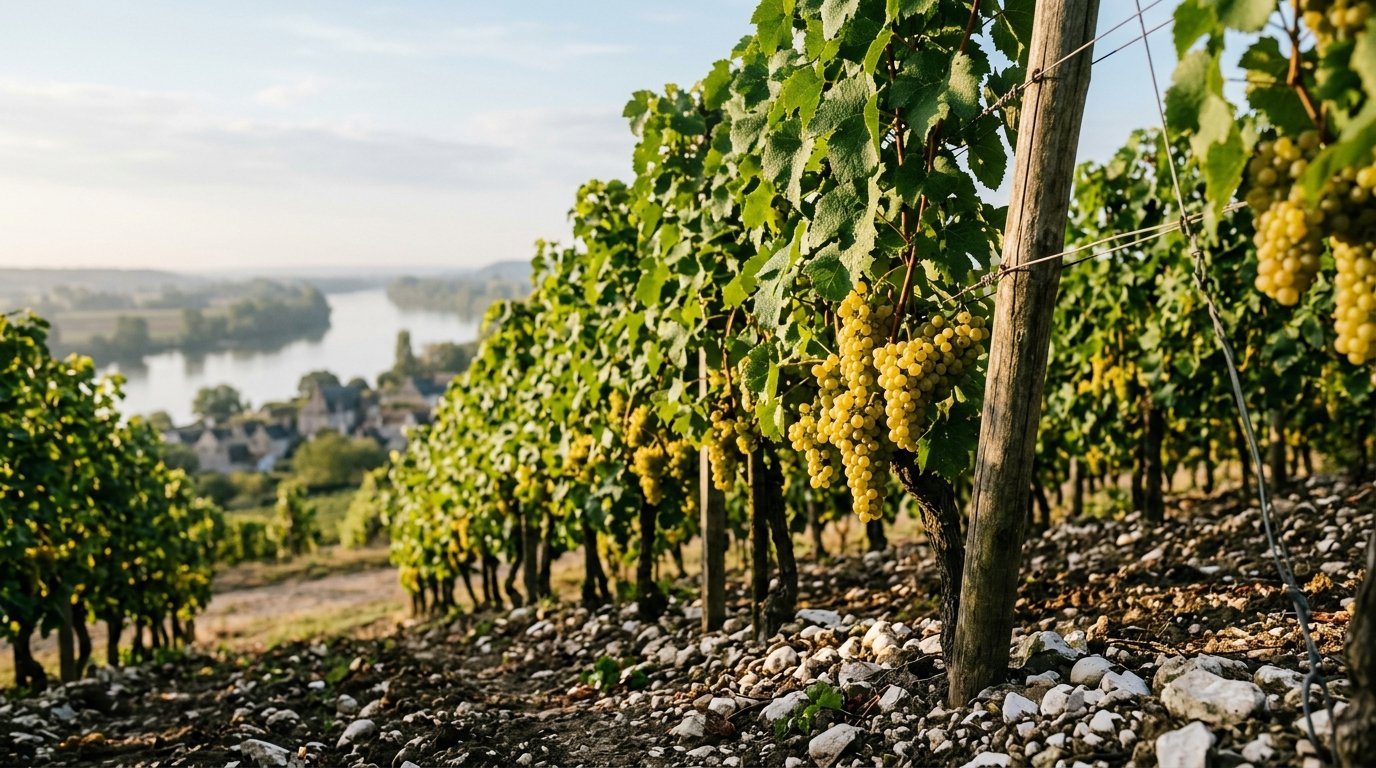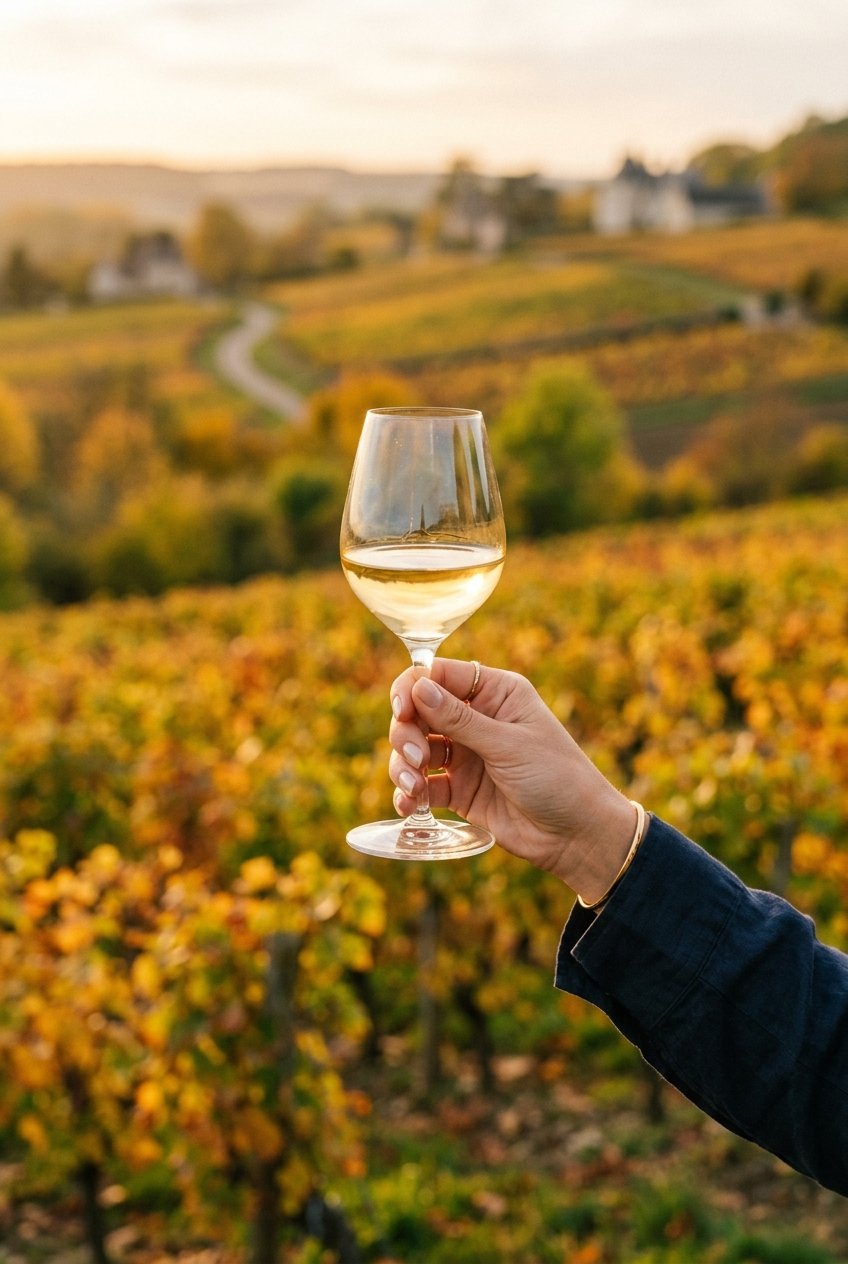
Good news: you are already tasting wine. You just need a vocabulary to put words to what your palate has been sensing all along. It is a little like realising you have been speaking prose all your life without knowing it – except that this prose smells of vine flowers, damp chalk, and sometimes a hint of green pepper that gives a Chinon its entire personality.
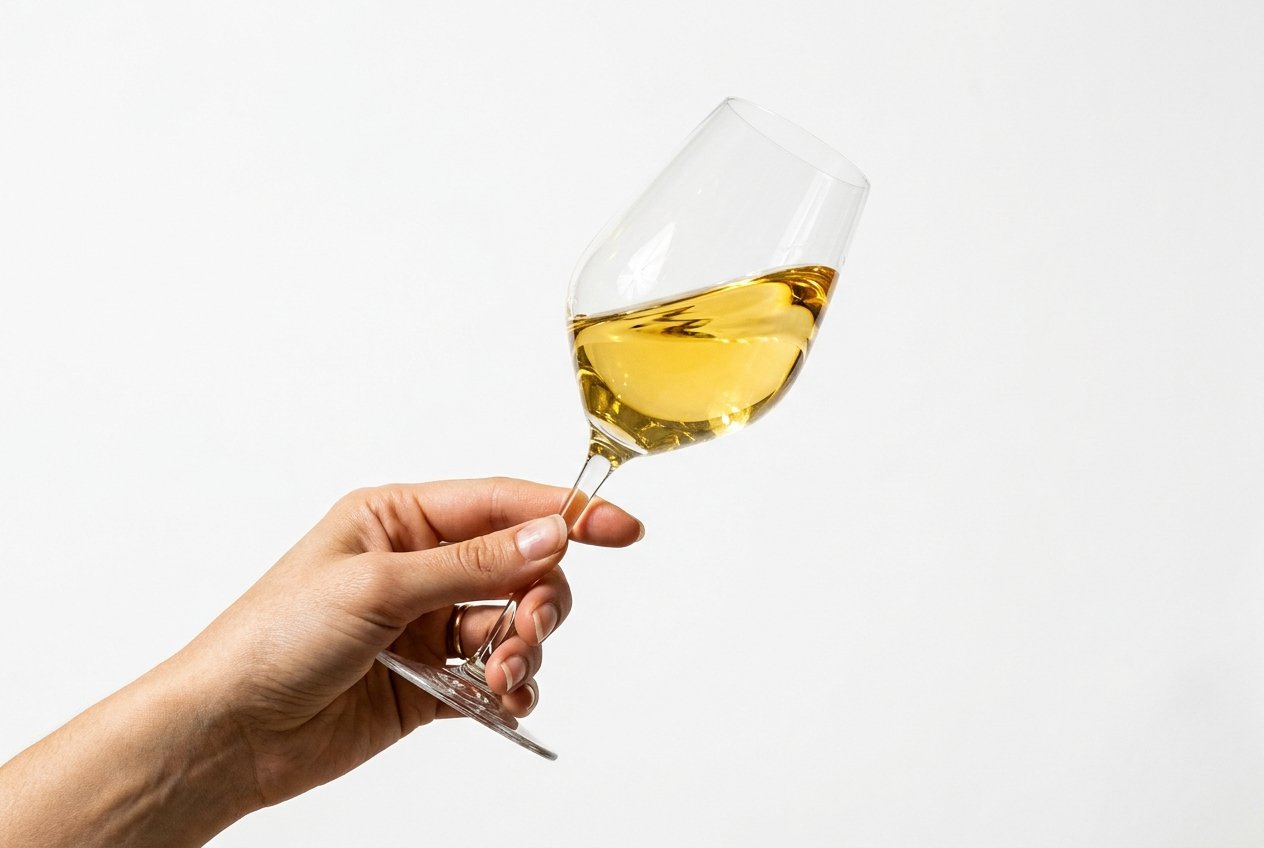
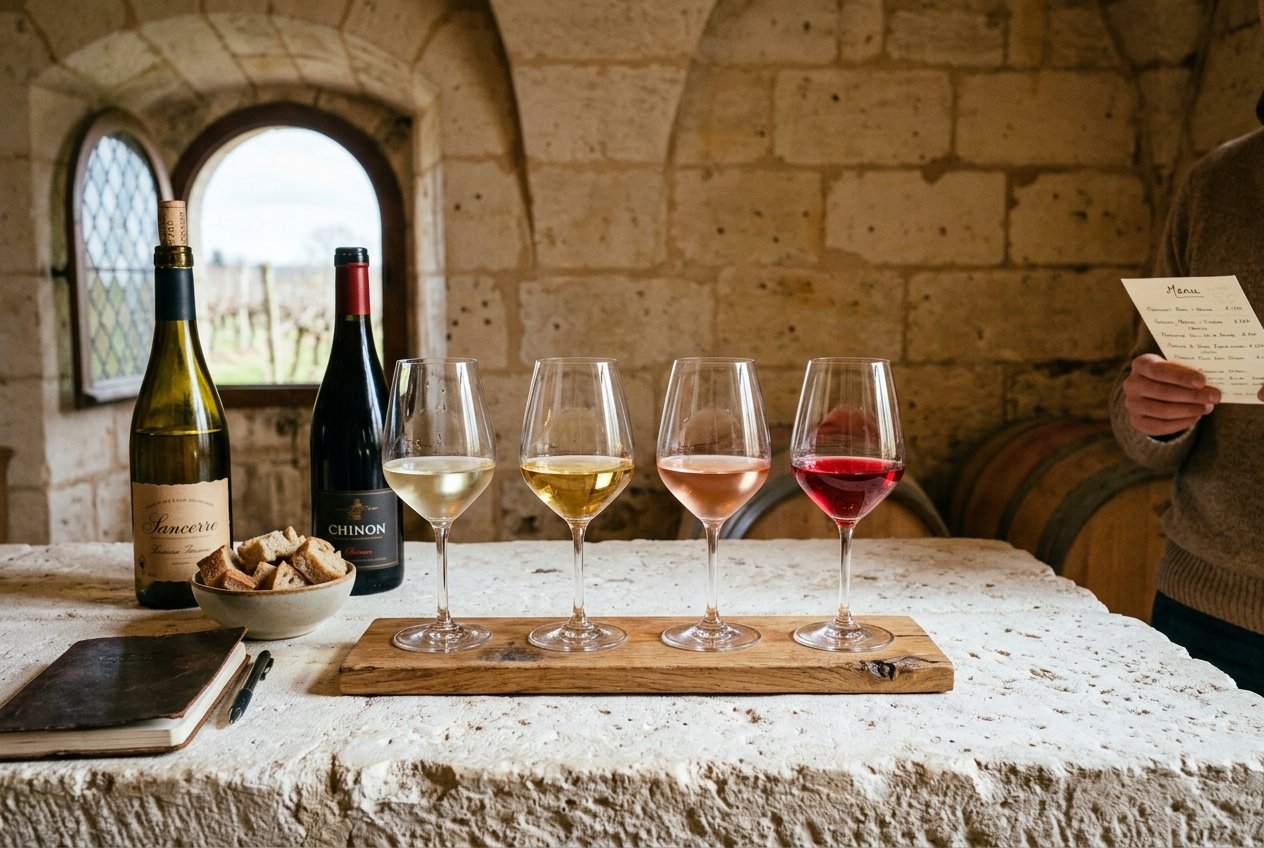
Tasting begins before the glass touches your lips. It begins with posture: hold the glass by the stem (never by the bowl) to avoid warming the wine with your hand. Then tilt it slightly against a white background – a sheet of paper will do. Look at the colour, the brilliance, the clarity. A cloudy wine that is not intentionally unfiltered deserves your attention. A pale white with green reflections speaks of youth and freshness. A deep golden yellow announces body and perhaps a few years of cellaring. Nothing complicated: you are reading a book by its cover.
Before the nose, a short historical detour. The idea that one can “learn” to taste wine dates back to the 18th century, when Bordeaux merchants began training their brokers in a common language to describe vintages and set prices. In Touraine and Anjou, the tradition was more rural and less codified: people said a Vouvray was “lively” or “full”, a Bourgueil “crunchy”. This down-to-earth, direct and evocative vocabulary remains the best guide for a beginner today. The Loire people have always drunk their wine at the table, not on a tasting bench.
Yet around wine, an occasionally intimidating liturgy has developed: cathedral-shaped glasses, 47-point tasting notes, the snobbery of the person who sniffs their glass for ten minutes before solemnly concluding “I perceive the minerality.” This staging has the merit of drama but the drawback of discouraging nine out of ten sincere amateurs. Tasting has one single objective: to increase the pleasure you take in drinking a good wine.
The nose in two stages: honesty first, complexity second
The first thing to do with a glass of wine is not to swirl it immediately. Bring your nose to the still glass and breathe calmly: this is the first nose. It tells you first whether the wine is healthy – free of wet cardboard smell (TCA cork taint), vinegar or sulphur. If all is well, you capture the lightest and most volatile aromas, those that evaporate first: the floral notes of an Anjou Chenin, the fresh citrus of a Sancerre Sauvignon Blanc, the wild strawberry of a Chinon Cabernet Franc.
Then swirl the wine by making a circular motion with the glass. This releases a second wave of deeper and more complex aromas: toasted wood if the wine spent time in barrel, spices (pepper, liquorice), tertiary ageing notes (honey, beeswax for aged dry Vouvray, mushroom and undergrowth for some reds). This is the second nose. Do not try to identify every precise aroma. Work by families: fruity, floral, vegetal, spiced, oaky. Precision comes with practice, not with effort.
The palate: acidity, richness and tannins form the balance
The first sip reveals the wine’s texture. Three parameters structure your analysis. Acidity first: it triggers salivation, brings freshness and makes you want another sip. A well-made Touraine Sauvignon has that straight, focused tension that makes the mouth water. Then richness: it comes from alcohol, residual sugar and sometimes lees ageing. It brings volume, roundness, that sensation that the wine “fills” the mouth pleasantly. Finally tannins, present only in red wines and some rosés: they create that slight astringency, that catching sensation on the palate and gums. The fine, silky tannins of a Chinon Cabernet Franc are very different from the massive tannins of a Médoc Cabernet-Sauvignon.
There is a technique that few introductions mention: the slurp. After taking a sip, roll the wine over your tongue and draw in a thin stream of air through slightly parted lips. This inelegant little sound has a real purpose: it propels aromatic molecules towards the retro-nasal passage, directly towards the olfactory receptors. The aromas seem to multiply. It is the secret of professional tasters at blind competitions. In polite company, save it for the winemakers: they will appreciate it.

Partner offer

Direct wine, better price.
The Roberval balance and the finish: two quality benchmarks
A great wine is above all a balanced wine. Imagine a set of scales: on one side liveliness and tension (acidity, tannins, slight bitterness), on the other roundness and softness (alcohol, residual sugar, richness). When both sides are level, we speak of harmony. A wine that is too acidic without body is lean and aggressive. A wine that is too round without tension is flat and tiring. Loire wines – and this is one of their main strengths – excel at this balance, thanks to a temperate northern climate that naturally preserves acidity in the berries even at full ripeness.
The length of finish, measured in caudalies (one second = one caudalie), is the other key indicator. After swallowing or spitting, how many seconds do the pleasant flavours persist? Fewer than three seconds: a short, simple wine. Between five and eight seconds: a good pleasure wine. More than ten seconds: a wine of character. Some great Chenin Blancs from the Layon or grand Sancerres exceed fifteen caudalies. Professionals also use the acronym CIEL: Complexity of aromas, Intensity on the nose and palate, Equilibrium on the palate, Length of finish. A quick checklist to forget nothing when tasting.
The Loire thread: acidity, digestibility, immediate pleasure
If you had to define the DNA of Loire wine in one sentence, it would be this: digestible and invigorating wines, marked by a naturally refreshing acidity that comes from the territory itself. The Loire Valley sits at the northern limit of French viticulture in its Atlantic section. Cool September nights slow ripening and preserve the tartaric and malic acidity of the grapes, where southern vineyards exhaust it under the heat. This is not a flaw: it is a signature.
“Loire wine is the lightness of the North with the generosity of the Centre. It does not try to impress. It convinces.” – André Jullien, Topographie de tous les vignobles connus, 1816.
Loire Sauvignon Blanc (Sancerre, Pouilly-Fumé, Touraine) expresses this tension directly: straight structure, salinity, vivid citrus aromas (lemon, grapefruit), noble vegetal notes (box tree, blackcurrant bud, fine asparagus). It is a white that does not lie about its intentions: it wants to be fresh, precise and mineral. Chenin Blanc, the chameleon grape of Anjou-Touraine, is more ambiguous and therefore more fascinating. It retains its vibrant acidity whatever the form: sparkling as Crémant de Loire, dry and mineral as Savennières, off-dry as a Vouvray demi-sec, nobly sweet in Coteaux du Layon or Bonnezeaux. Even at 100 grams of residual sugar, Chenin never loses its tension. This thread of acidity is its identity.
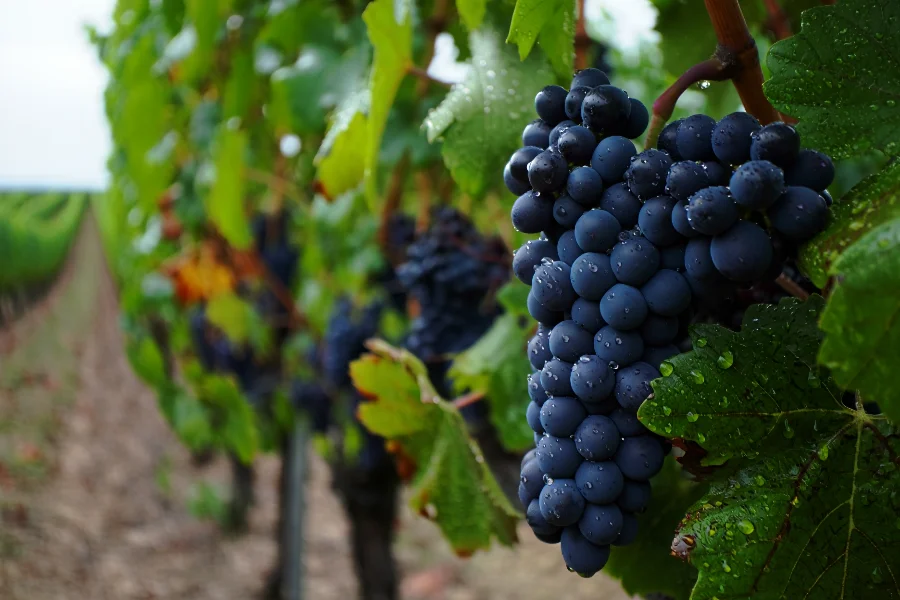
Loire Cabernet Franc (Chinon, Bourgueil, Saumur-Champigny) is the red counterpoint. Digestible, fruity, driven by small red fruits (raspberry, cherry, redcurrant), with that characteristic note of green pepper or fresh grass that sometimes unsettles novices but is in fact a terroir signature. The tannins are fine, the texture light: it can be served slightly cool (15°C), which Loire people do instinctively, and have done for generations.
Distinctive terroirs and lees ageing: two local signatures
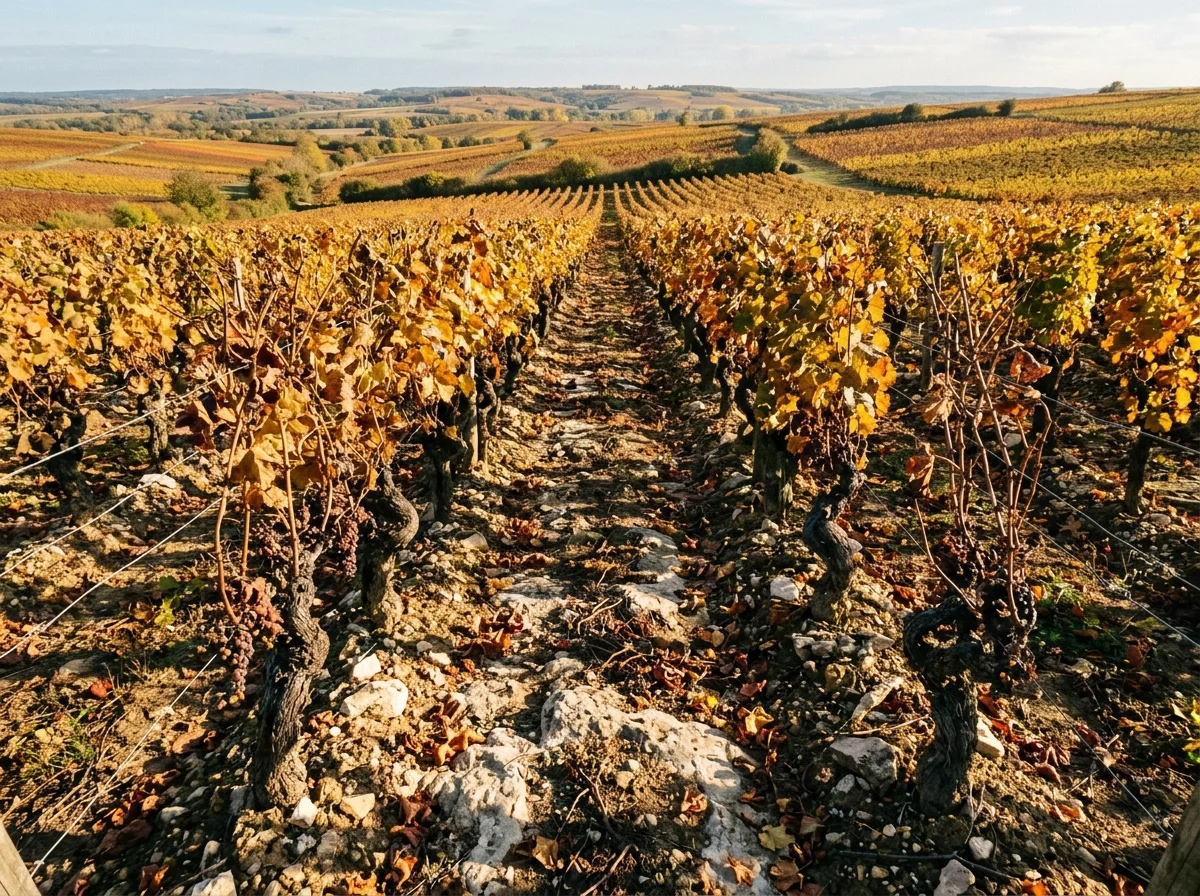
To understand why Loire wines have that particular texture – that purity, that salinity, that salivating finish – one must look beneath the vines. The chalky tuff of Touraine (white, porous fossilised volcanic rock), the flint of the Centre-Loire appellations (Sancerre, Pouilly, Quincy) and the slate schists of Anjou-Saumur each manage water differently. Tuff drains quickly and releases slowly; flint reflects solar heat and amplifies minerality; schists accumulate daytime warmth to release it to the berries at night. None of these terroirs produces heavy wines. All produce wines of precision.
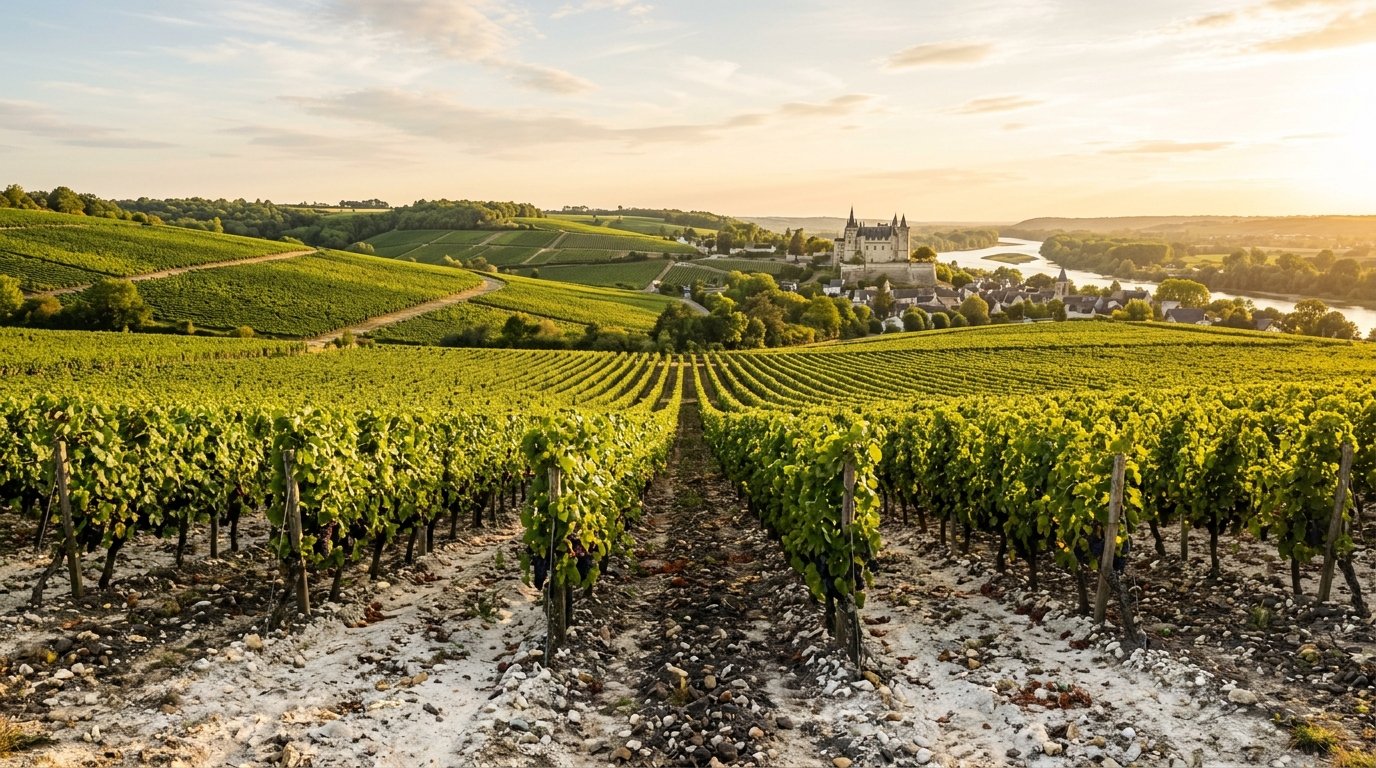
Lees ageing is the signature of the Pays Nantais. Muscadet – primarily Sèvre et Maine, but also Côtes de Grand-Lieu and Coteaux de la Loire – can rest for several months to several years on its fine lees (the dead yeast cells after fermentation). This slow contact adds body, volume, light brioche notes, and sometimes a slight natural carbonation that gives a prickle on the palate. But it never masks the iodine and salinity of the granitic and gneissic Armorican Massif. A well-made Muscadet sur lies is one of the most food-friendly wines in France with shellfish – and one of the least expensive, which discerning amateurs have quietly decided to keep to themselves.
In summary, a few ideas to take home with you:
- Pleasure is the first and last criterion for evaluating a wine. Everything else serves that pleasure.
- The first nose (still glass) reveals the wine’s honesty; the second nose (after swirling) reveals its complexity.
- Working by aromatic families (fruity, floral, vegetal, spiced, oaky) is more effective than hunting for an elusive precise aroma.
- The balance between liveliness (acidity, tannins) and roundness (alcohol, sugar, richness) is the central quality criterion, measurable without any tool.
- The length of finish (caudalies) is the second quality criterion: count the seconds after swallowing.
- Loire wines are wines of natural acidity, digestibility and immediate pleasure – their common thread whatever the grape variety or appellation.
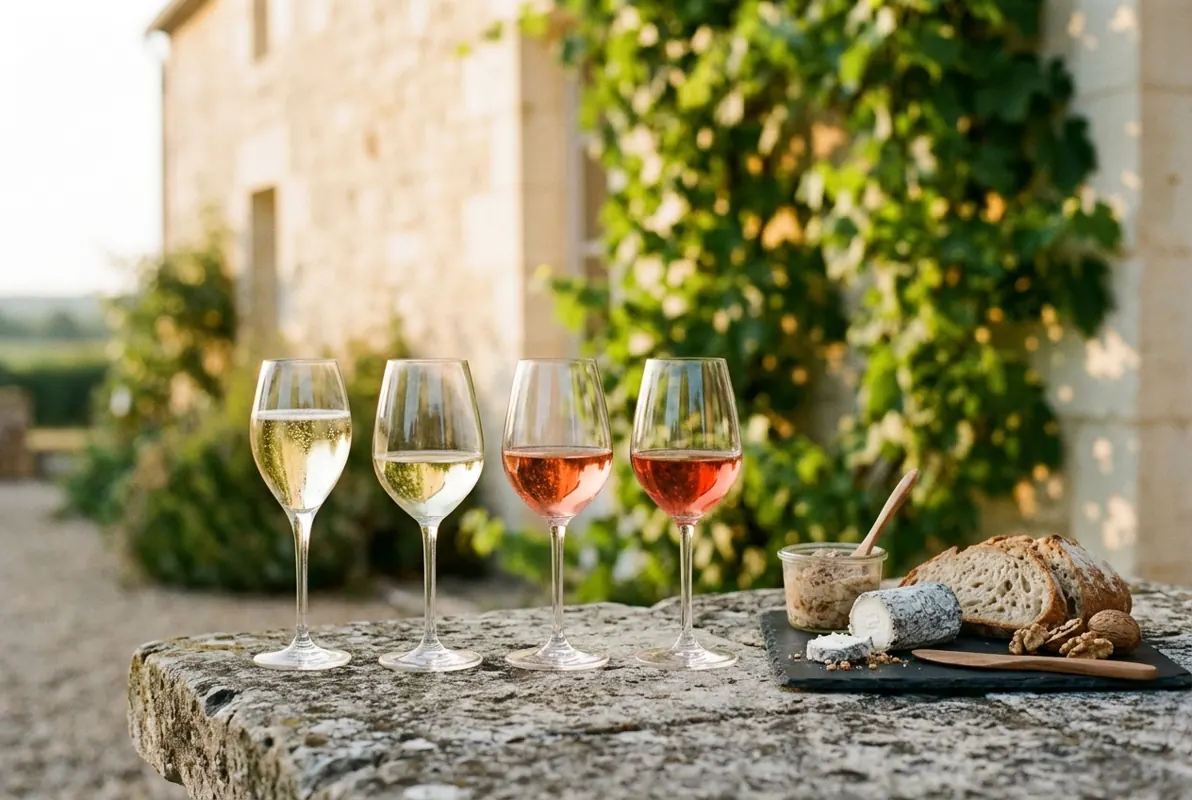
The Loire Valley has more than 250 appellations and grape varieties: you are unlikely to run out of discoveries. Start with a glass of Muscadet sur lies with Brittany oysters, a Sancerre with fresh goat’s cheese from the Berry, or a slightly chilled Chinon with a country terrine. This is how Loire people welcome you – and tasting, then, is no longer an exercise. It becomes self-evident. Find our visiting wineries on the Divine Loire app and explore their cellars directly in the field.
Wineries mentioned in this article
Domaine du Petit Chambord
Domaine des Huards
Domaine de Veilloux