There is a certain gravity that hits you when you stand on the heights of the Savennières plateau. It is not just the steepness of the hills falling into the Loire, but the weight of history and the sheer intensity of the rock beneath your boots. For a man like me, who has spent half his life trying to decode the mysteries of fermented grape juice, reaching Savennières feels like arriving at the final boss of a video game. It is challenging, sophisticated, and utterly rewarding.
Savennières is not a wine for the faint of heart. If you are looking for a breezy, poolside sipper, you have wandered into the wrong vineyard. This is the intellectual giant of the Loire Valley, a place where Chenin Blanc reaches a level of dry intensity that few other regions in the world can even dream of. It is a wine that demands your full attention, a wine that evolves over decades, and a wine that – frankly – can be a bit of a snob. But oh, what a magnificent snob it is.
My first encounter with a mature Savennières was in a small bistro in Angers, years ago. I remember the waiter pouring a golden liquid that looked more like liquid honey than wine. One sniff, and I was transported. It was a kaleidoscope of beeswax, bitter almonds, bruised apples, and a mineral streak so sharp it felt like licking a cold, wet lightning bolt. I knew then that my relationship with Anjou would never be the same.
The Terroir: A Volcanic Love Story
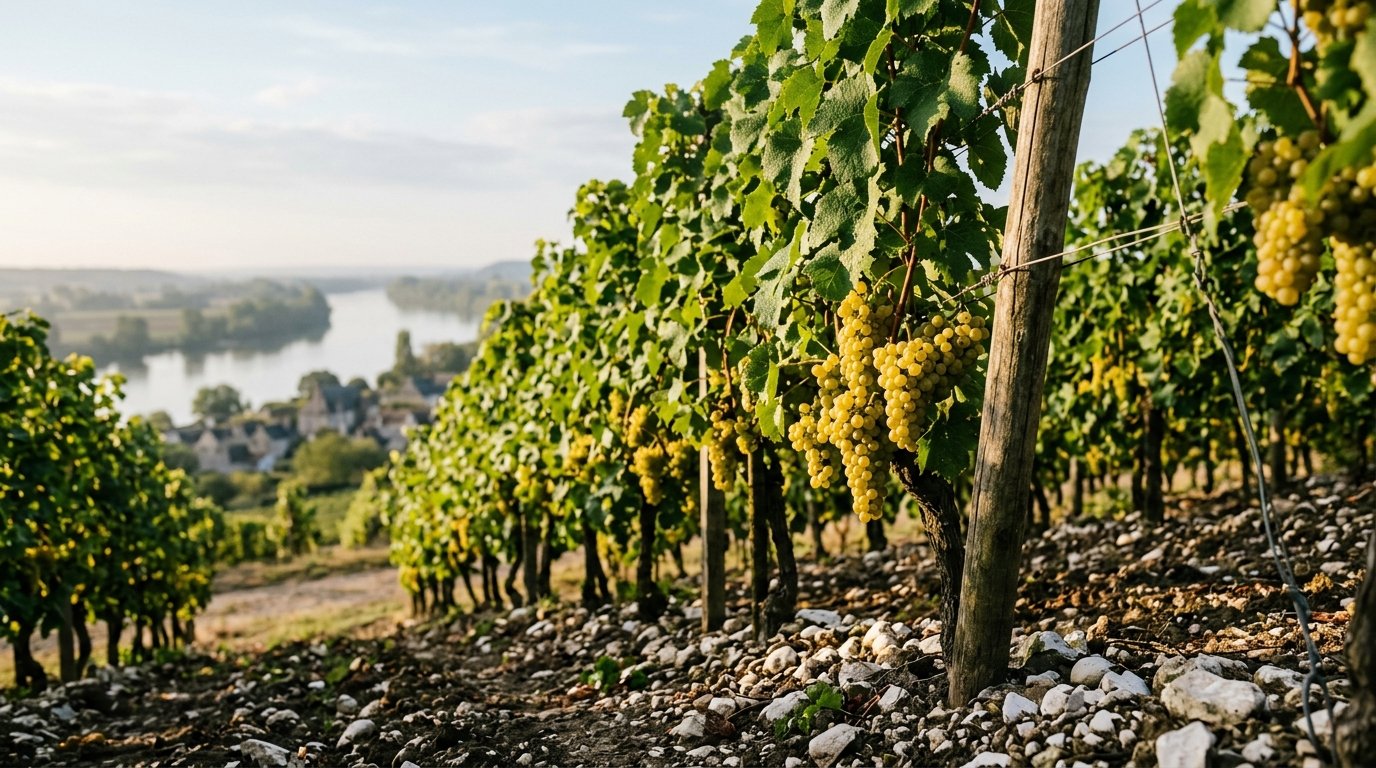
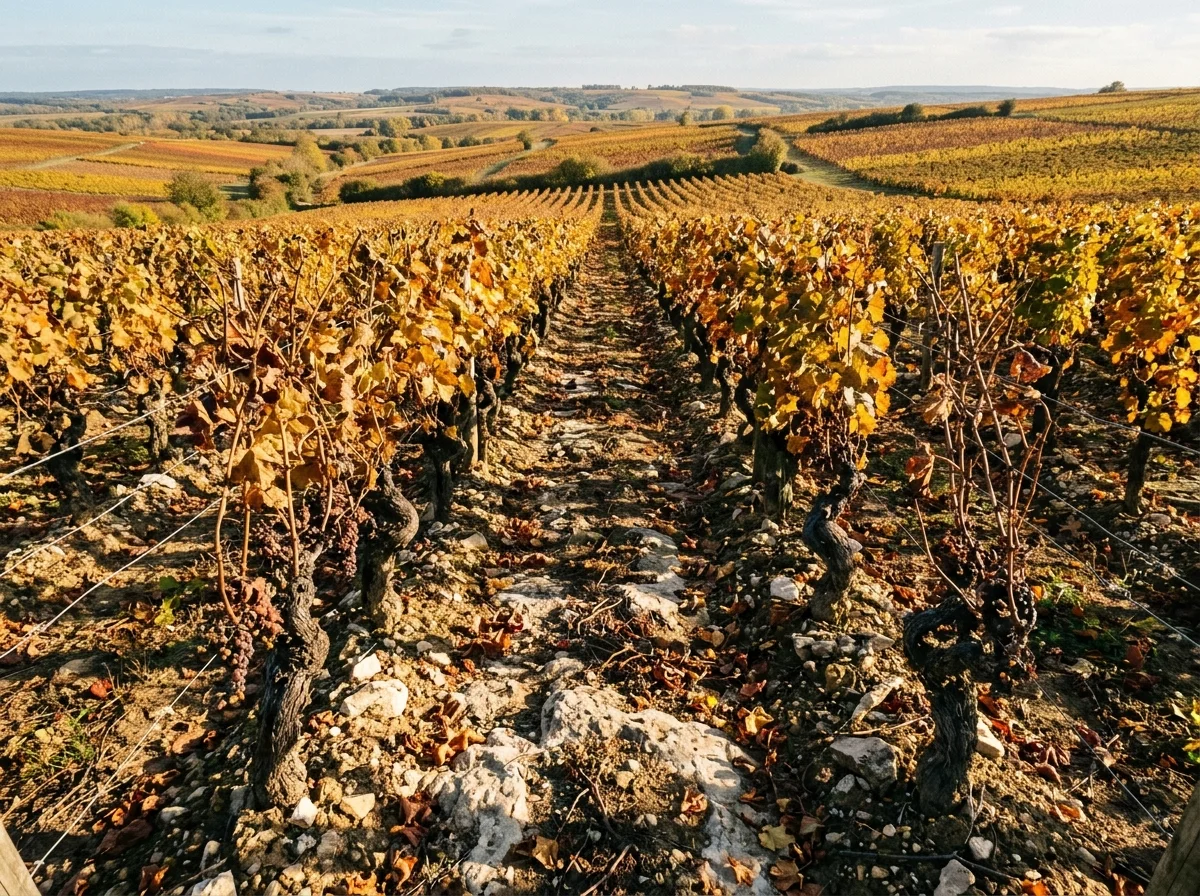
What makes Savennières so special? It comes down to one word: Schist. While most of the Loire Valley is famous for its soft, white tuffeau limestone, Savennières sits on the edge of the Armorican Massif. Here, the soil is composed of ancient blue and purple schist, sandstone, and volcanic rocks. It is hard, unforgiving ground that forces the vines to dig deep into the earth for sustenance.
This schistose soil is a heat trap. It absorbs the sun’s rays during the day and radiates it back to the grapes at night, ensuring perfect ripeness even in cooler years. But more importantly, it imparts a structural power to the wine that is almost tactile. When people talk about ‘minerality’ in wine, they are often guessing. In Savennières, you don’t have to guess. You can feel the grip of the rock on your palate.

The appellation itself is tiny – barely 150 hectares – clinging to the right bank of the Loire, just south of Angers. The slopes are perfectly oriented to the south and southwest, catching every minute of sunshine while being protected from the cold north winds by the plateau. It is a microclimate of perfection, a sun-drenched sanctuary for the Chenin Blanc grape.
I often think of François Rabelais [the 16th-century French Renaissance writer, humanist, and devoted wine lover] when I walk through these vineyards. He knew the wines of Anjou well, and though he is often associated with the reds of Chinon, the soul of his ‘Gargantuan’ appetite surely would have found its match in the powerful whites of Savennières. Indeed, Rabelais might have said that a man who does not appreciate the vigor of a great Chenin is a man whose spirit has yet to be properly woken.
The Grape: Chenin Blanc as a Masterpiece
In the Loire, we call Chenin Blanc the ‘Pineau de la Loire,’ but in Savennières, it deserves a more royal title. This is where the variety sheds its fruity, floral youthful skin and reveals its true, masculine power. Unlike its famous cousin in Vouvray, which often plays with sweetness, Savennières is almost always vinified bone-dry.
But ‘dry’ is a deceptive word here. Because of the incredible ripeness achieved on the schist slopes, the wines have a natural richness and weight – what we call gras – that makes them feel opulent. It is a paradox: a wine that is analytically dry but tastes and feels like luxury. In the glass, it begins with notes of white flowers and citrus, but as it ages, it develops those legendary aromas of linden, acacia, quinces, and eventually, the noble ‘petrol’ and truffle notes that leave tasters in awe.
I remember visiting Nicolas Joly [the passionate pioneer of biodynamic viticulture and owner of the legendary Coulée de Serrant] a few years back. Listening to him speak about the ‘life force’ of the soil while tasting his wines is an experience that stays with you. Whether you subscribe to the cosmic alignment of the stars or not, there is no denying that his wines possess an energy that is vibrating on a different frequency. They are alive.
The Legendary Crus: Roche-aux-Moines and Coulée de Serrant
Within the small world of Savennières, there are two jewels that stand above the rest. These are the two ‘Cru’ designations that were granted their own AOC status because of their exceptional character: Roche-aux-Moines and the monopoly of Coulée de Serrant.
The Coulée de Serrant is a seven-hectare site that has been planted with vines since the year 1130, when Cistercian monks first realized they had found something special. It is one of the most famous vineyards in the world, and for good reason. The wine is unique, sometimes controversial, but always profound. It is picked in several ‘tries’ (passages) to ensure only the most intensely ripe grapes are used, sometimes even with a touch of noble rot – not for sweetness, but for aromatic depth.
Roche-aux-Moines, slightly larger at about 33 hectares, produces wines that are perhaps more approachable in their youth but no less complex. They tend to be elegant, with a crystalline purity that balances the massive power of the schist. Both of these crus are benchmarks of what is possible when history, geology, and a nearly obsessive commitment to quality converge.
The Art of Patience
If there is one thing I must impress upon you, it is this: Savennières requires patience. To drink a great Savennières in its first three years is a bit like reading the table of contents and skipping the rest of the book. It can be austere, even aggressive, in its youth. The acidity and the mineral structure need time to melt into the fruit.
If you can wait five, ten, or even twenty years, the rewards are immense. The wine doesn’t just age; it transforms. It becomes a golden, viscous elixir that can stand up to the richest dishes on the table. It is one of the few white wines in the world that I would happily serve with roasted poultry, sweetbreads, or even a creamy mushroom risotto.
I recently opened a 2005 bottle from a small producer near the village. The cork came out with a sigh, as if it had been waiting for this moment. The wine was the color of a setting sun on the Loire. It was so intense, so full of life, that it silenced the entire dinner table. That is the power of a great Savennières.
Gastronomy: When Anjou Meets the Plate
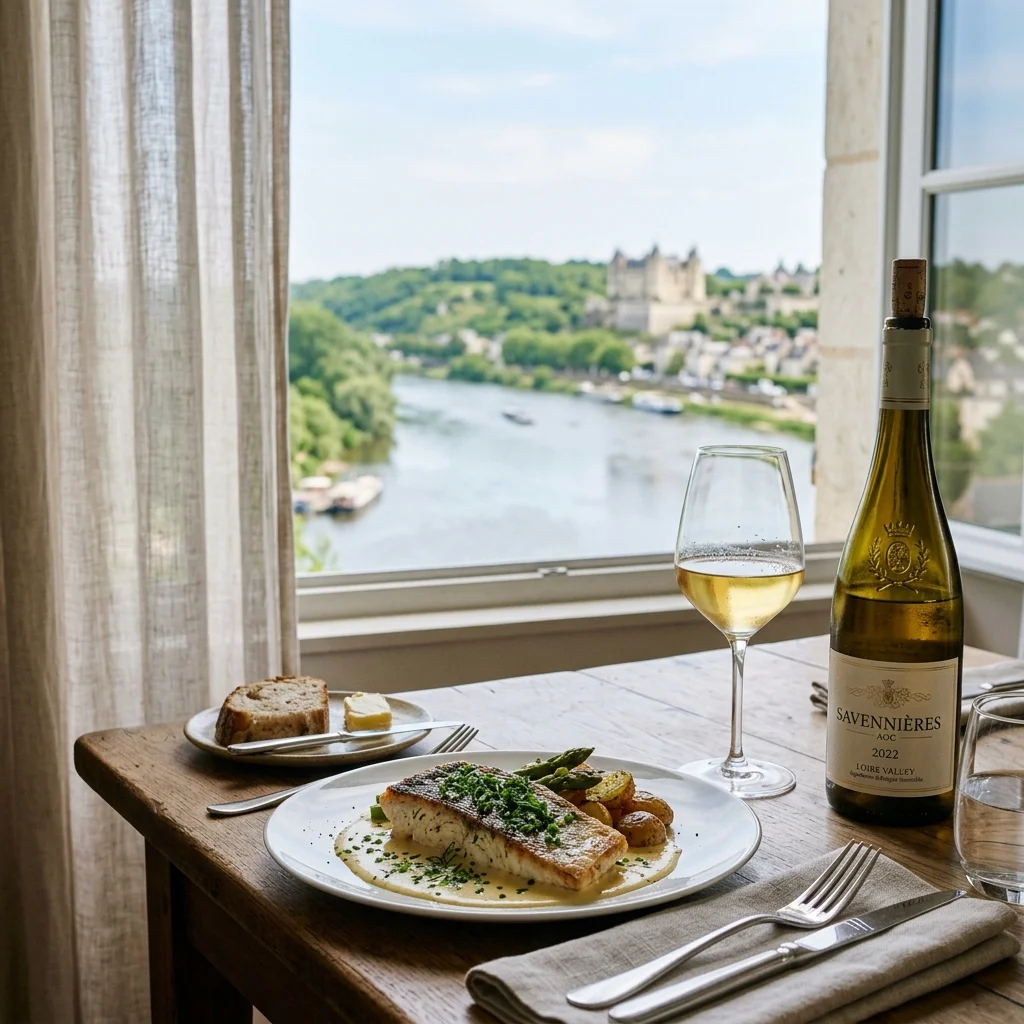
Talking about Savennières without talking about food is a crime in my book. Because of its high acidity and powerful structure, it is a master of the dinner table. In Anjou, we have a long tradition of freshwater fish from the Loire – pike-perch (sandre) or eel – served with a rich beurre blanc sauce.
The beurre blanc, famously invented just across the regional border, is the soulmate of Savennières. The wine’s acidity cuts through the butter like a hot knife, while its mineral depth echoes the subtle flavors of the fish. It is a pairing that makes sense on a molecular level. But don’t stop there. Try it with a ripe Comté cheese, or even with foie gras (if you want to be truly decadent).
I once had a Savennières with a slightly spicy Thai green curry, and I must confess, it worked brilliantly. The wine’s intensity was not overwhelmed by the heat, and the floral notes of the Chenin danced beautifully with the lemongrass and coconut. I is full of surprises, you see!
As Honoré de Balzac [the prolific 19th-century French novelist and playwright who frequently wrote about the beauty of the Loire Valley] once suggested, there is a poetry in the landscapes of Touraine and Anjou that enters the soul through the eyes and the glass. Savennières is the prose of that landscape – dense, complex, and enduring.
The Call of the Schist
In a world of increasingly standardized, fruity white wines that all taste vaguely of sunshine and stainless steel, Savennières remains a bastion of character. It is a wine that tastes like somewhere. It tastes of blue rock, of cold river mist, and of a thousand years of monastic labor.
It is not a wine for everyone, and that is precisely why I love it. It requires effort. It requires a cellar. It requires a certain kind of curiosity. But for those who are willing to take the journey, it offers a glimpse into the very heart of the Loire Valley. It is, quite simply, one of the greatest expressions of white wine on this planet.
So, the next time you see a bottle of Savennières on a wine list, don’t hesitate. Step into the arena. Engage your brain and your palate. You might just find yourself, as I did years ago, falling head over heels for the intellectual giant of the Loire.
If Savennières has sparked your curiosity for the great whites of the Loire, my journal is full of other treasures waiting to be discovered. The river still has many secrets to share.
Wineries mentioned in this post
Vignobles de la Coulée de Serrant

Domaine des Baumard