When I first attempted to memorize the intricacies of this majestic wine region, I felt as though I were trying to map the veins of a living, breathing organism. The river dictates everything here. It acts as a climatic regulator, a historical trade route, and the very lifeblood of the vignerons. To grasp the essence of these wines, one cannot simply memorize grape varieties; one must follow the water from the center of France to the cold embrace of the Atlantic Ocean.
Decoding the Third Largest French Wine Region
Before embarking on our geographical journey, we must acknowledge the sheer scale of the territory. The Loire Valley is officially the third-largest wine-producing region in France by volume. It yields a staggering 400 million bottles annually, drawn from approximately 70,000 hectares of meticulously tended vines. It is a land of abundance, yet it remains wonderfully approachable.
What fascinates me most is the region’s supremacy in specific categories. It stands proudly as the number one producer of French AOC white wines and the second-largest producer of AOC sparkling wines, trailing only behind Champagne. White wines entirely dominate the local culture, accounting for nearly 57% of the total production. This is a kingdom where acidity, freshness, and bright fruit profiles reign supreme.
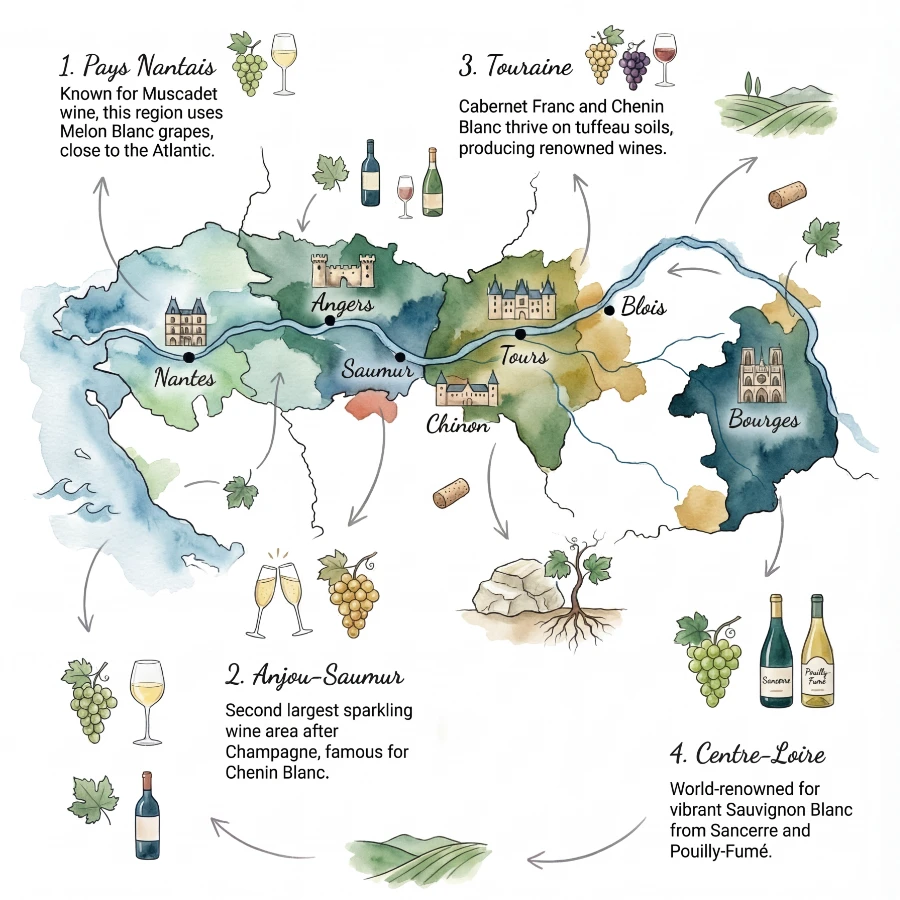
The Pays Nantais and the Salty Kiss of the Atlantic
Our journey begins in the west, where the river meets the ocean. The Pays Nantais is heavily influenced by maritime weather, enduring harsh winds and heavy rainfall. Here, the resilient Melon de Bourgogne grape has found its ultimate sanctuary. It produces the iconic Muscadet, a wine that is as bracing and invigorating as a splash of seawater across your face on a brisk morning.
The magic of this sub-region lies in the winemaking process known as sur lie aging. By leaving the fermented wine in contact with its dead yeast cells over the winter, winemakers impart a delicate creaminess and a subtle effervescence to the final product. This technique brilliantly balances the naturally high acidity of the grape, creating a textural masterpiece.
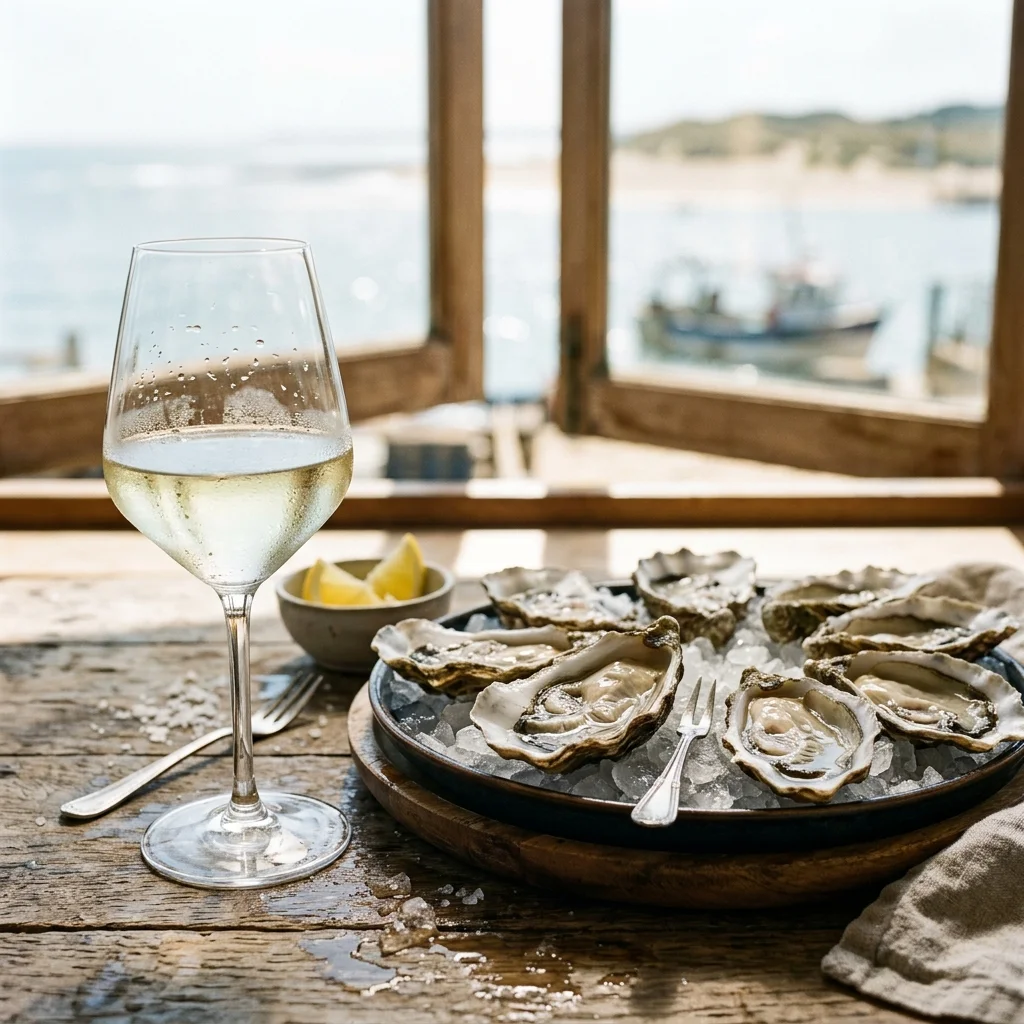
I always tell my guests that there is no greater pairing in the gastrosphere than a chilled glass of Muscadet Sèvre et Maine alongside fresh oysters. The wine’s inherent salinity acts as a squeeze of lemon, elevating the brine of the seafood to celestial heights.
Anjou-Saumur: The Kingdom of Chenin and Cabernet
As we travel eastward inland, the climate subtly shifts, becoming slightly warmer and drier. Welcome to Anjou-Saumur, a versatile playground that produces everything from bone-dry whites to luscious sweet nectars and robust reds. This area is the indisputable stronghold of the Chenin Blanc grape, a highly adaptable varietal that I consider to be one of the most intellectually stimulating grapes in the world.
In Saumur, the chalky limestone soils—known locally as tuffeau—provide the perfect foundation for producing world-class sparkling wines. Simultaneously, just a short drive away in the Coteaux du Layon, autumn mists rolling off the river encourage the development of noble rot. This natural phenomenon concentrates the sugars in the Chenin Blanc grapes, resulting in profoundly sweet, golden wines that can age effortlessly for decades.
Touraine: The Heart of the Garden of France
Continuing our journey upstream, we arrive in Touraine. Historically dubbed the “Garden of France,” this sub-region is surrounded by opulent châteaux and lush forests. Here, the Loire Valley wine map becomes beautifully complex. We see a glorious intersection of Chenin Blanc, Sauvignon Blanc, and the distinguished red grape, Cabernet Franc.
The appellations of Chinon and Bourgueil are non-negotiable stops for any serious wine lover. The Cabernet Franc grown on their gravel and sandy soils yields bright, fruit-forward reds with aromas of crushed raspberries and pencil shavings. It is the sort of sophisticated yet rustic wine that makes you want to sit by a roaring fire and heartily debate philosophy.
The Central Vineyards: Sancerre and the Sharpness of Flint
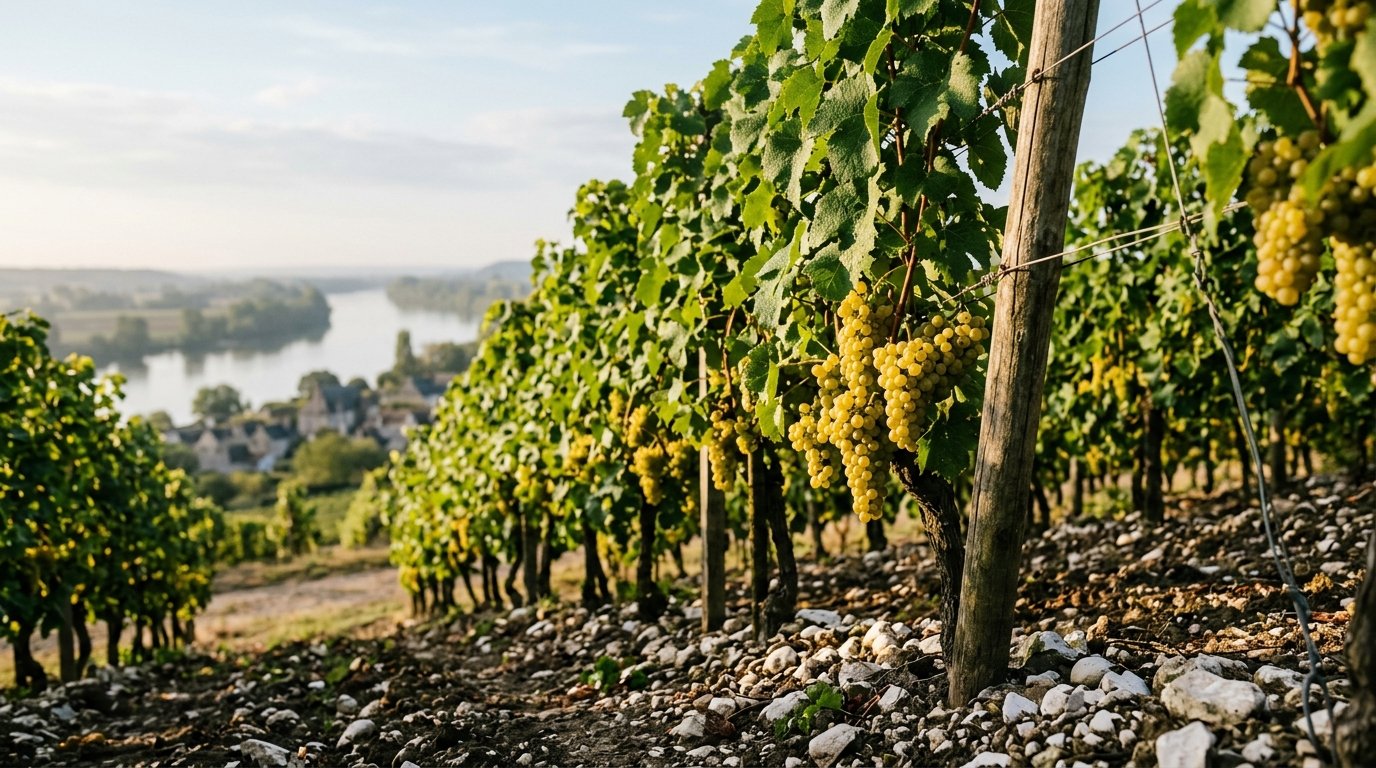
Finally, we reach the easternmost edge of the Loire Valley map: the Central Vineyards. Situated at the exact geographic center of France, this area is geographically closer to Burgundy than it is to the Atlantic. Here, the landscape is defined by rolling hills and ancient soils, and the undisputed monarch is the illustrious Sauvignon Blanc grape.
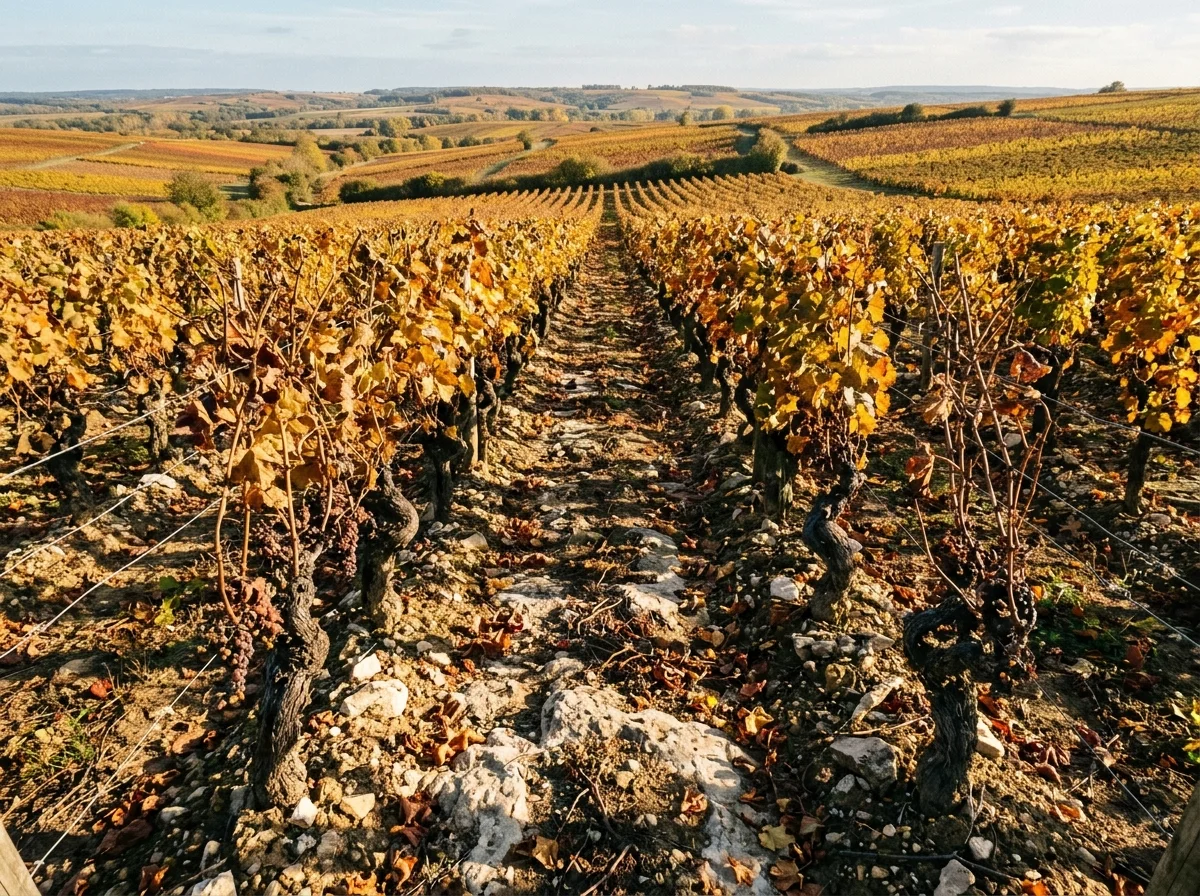
The twin appellations of Sancerre and Pouilly-Fumé stare at each other across the river, yet they express themselves differently. The terroir is heavily influenced by Kimmeridgian limestone and a unique silex (flint) soil. This profound geological composition imparts a striking, smoky minerality—often described as “gunflint”—to the meticulously crafted white wines, making them intensely aromatic and incredibly precise.

Master the Map: 6 Technical Landmarks
To summarize our expedition across the 87 appellations of the Loire Valley, here are the essential reference points you must remember:
- Scale: The region spans a massive 1,000 kilometers, holding 70,000 hectares of vines.
- Volume: It is France’s third-largest wine-producing region (400 million bottles/year).
- White Wine Dominance: The Loire is the absolute leading producing region for French AOC white wines (57% of total output).
- Pays Nantais: Look for Melon de Bourgogne and the mandatory sur lie aging technique for authentic Muscadet.
- Anjou-Saumur & Touraine: These middle regions champion the versatile Chenin Blanc and the structured, red Cabernet Franc.
- Central Vineyards: Sancerre and Pouilly-Fumé rely entirely on Sauvignon Blanc grown on distinctive flint and limestone soils.
The river still has many secrets to whisper. If you wish to receive my monthly gazette on the hidden gems of the Loire Valley, strictly reserved for those who appreciate the finer things, I invite you to subscribe to our newsletter or follow our journey on social media. Cheers to the next discovery!