I have stood at the foot of the medieval fortress of Chinon on a misty October morning, the Vienne shimmering silver below, the vine-covered tuffeau cliffs glowing amber above. I have tasted the local wine from a cellar carved directly into that rock. And I confess that in that precise moment, I understood, viscerally, why François Rabelais—born just a short walk away in Seuilly—chose to immortalize this wine in his greatest works. Gargantua, his monstrous literary hero, drinks it. His creator drank it. And with good reason.
A Kingdom of Cabernet Franc
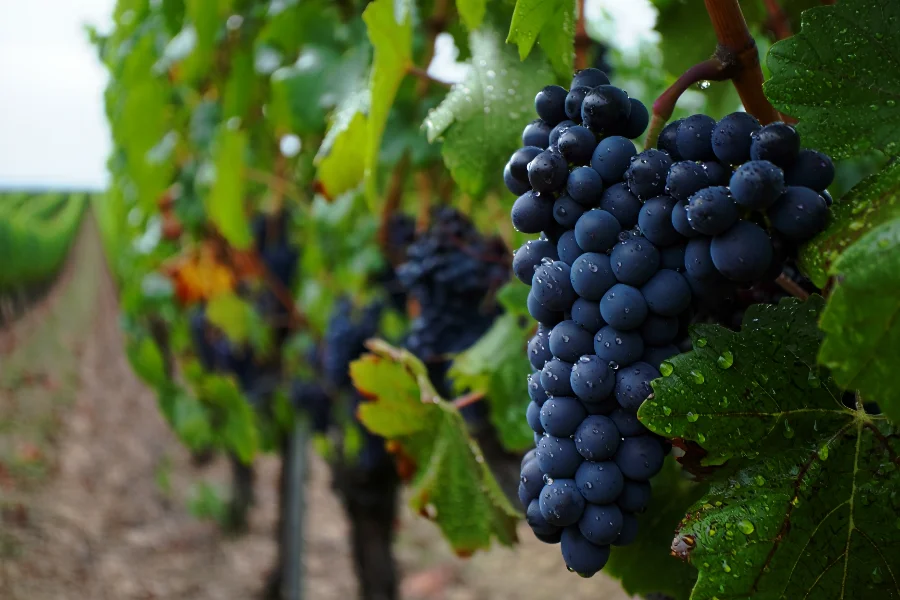
Chinon is, above all else, the global benchmark for Cabernet Franc. A grape that too often plays second fiddle to Cabernet Sauvignon in Bordeaux blends here finally takes centre stage. Known locally—with charming stubbornness—as Breton, after the 17th-century cleric Abbot Breton who is said to have introduced it to the region, this grape covers approximately 2,300 to 2,400 hectares across 26 communes in Indre-et-Loire.

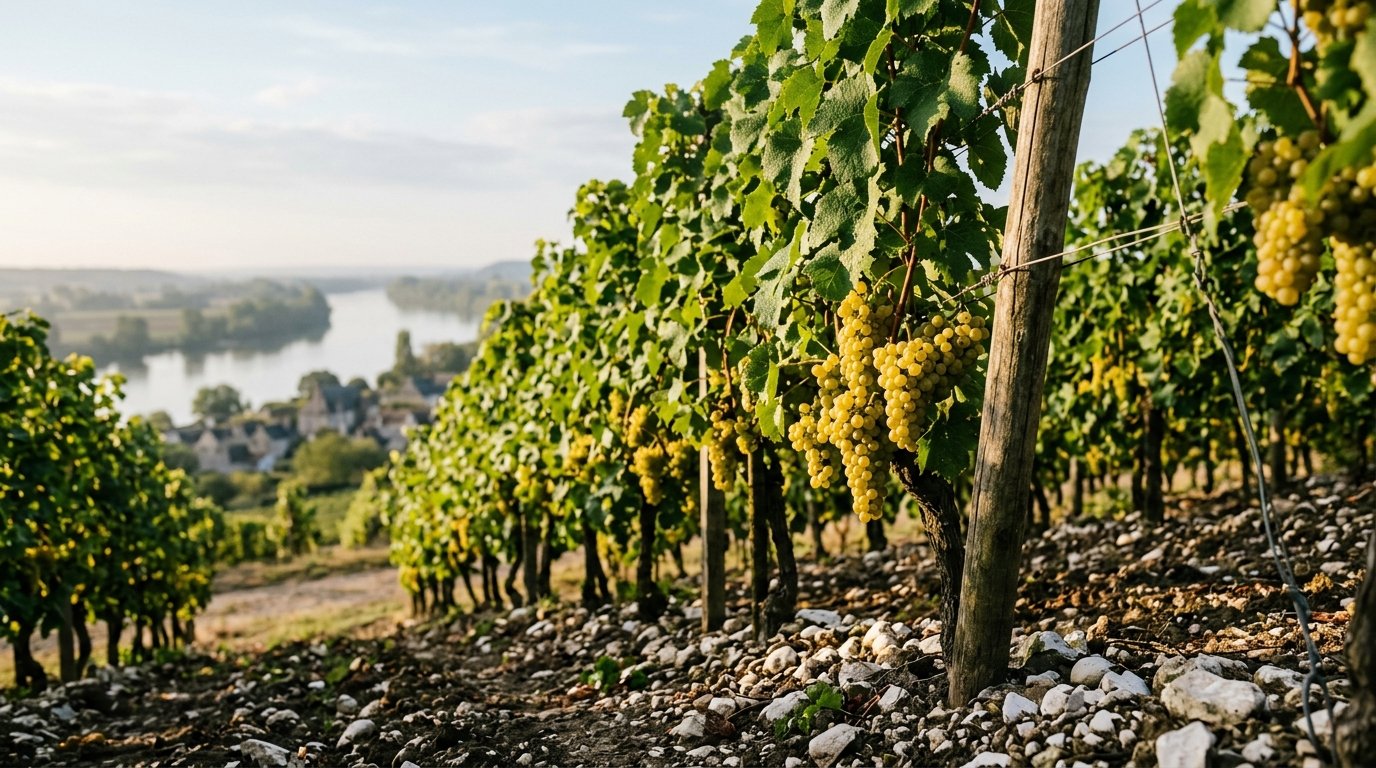
Red and rosé wines account for roughly 85% of the appellation’s total production: some 13 million bottles annually. The rules permit a small addition of Cabernet Sauvignon (up to 10%), though the finest producers rarely use it, preferring the pure, unadulterated expression of Breton on its native soil. The remaining production—a mere 5 to 7%—is white wine made from Chenin Blanc, a rare and genuinely fascinating alternative for the adventurous wine lover.
The Dual Soul of the Terroir
What makes Chinon intellectually compelling is its schizophrenic terroir. Traverse the appellation and you will encounter two radically distinct geological personalities, separated by a matter of mere kilometres.
The first is the alluvial plain: the flat, sandy, gravel-rich land that hugs the banks of the Vienne and Loire rivers. The soils here are light and well-drained. They warm quickly in spring, accelerating the growing season and producing Breton of a more immediately seductive character: light in body, vibrant in colour, and bursting with aromas of fresh red fruits—raspberry, strawberry, and a faint crunch of violet. These wines are meant to be opened within three to five years of harvest, ideally chilled, alongside a rack of ribs or a simple chicken in herbs. They represent Chinon at its most hedonistic and approachable.
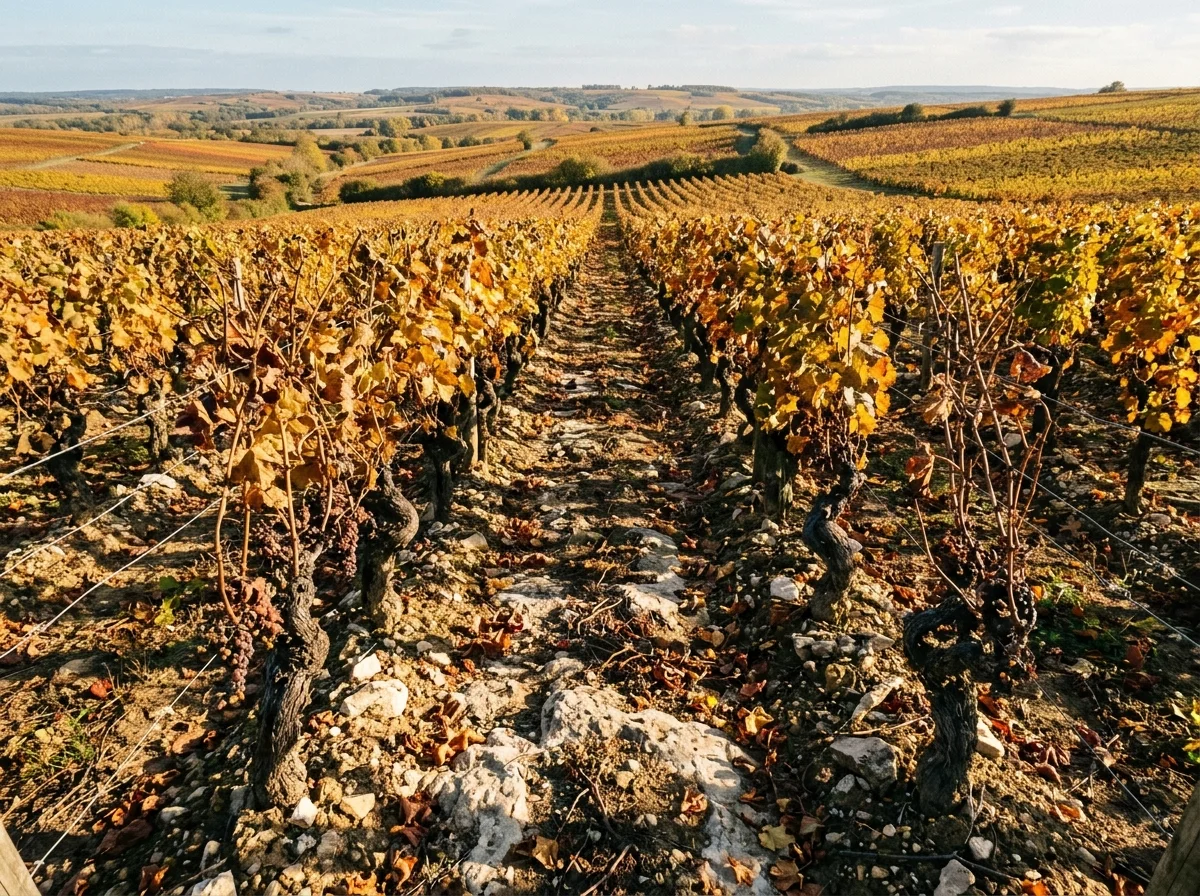
The second personality is that of the hillside tuffeau. The yellow-white limestone that dominates the cliffs and slopes above the town is a geological wonder. It is soft enough to carve—hence the extraordinary network of underground cellars and cave dwellings that pepper the region—yet dense enough to retain moisture through drought. It drains beautifully in wet years, and its chalk imparts an austere mineral backbone to the wines that demands patience. Breton grown on tuffeau and clay is a different creature entirely: darker, more structured, more demanding. Expect notes of graphite, black cherry, dried herbs, and a signature animality that wine writers euphemistically call “forest floor.”
Ageing: The Test of True Greatness
The most persistent misconception about Chinon—and indeed about Loire Valley reds in general—is that they are wines meant to be consumed young. This is categorically untrue for the serious cuvées from hillside sites. The finest bottles from Touraine‘s limestone soils can age effortlessly for 15 to 25 years, evolving from their youthful tannins into something quite extraordinary: a silky, complex wine redolent of leather, tobacco leaf, dried violets, and earthy minerals.
I have drunk a 2001 Chinon from Domaine Charles Joguet on its 22nd birthday. It was still perfectly alive, still speaking with authority and grace. The tannins had long since dissolved into a seamless texture. The fruit had retreated and given way to something older, wiser, and infinitely more complex. To drink a wine like that is not simply to consume a beverage; it is to commune with time itself.
The Giants of Chinon: Two Estates You Must Know
Any serious guide to Chinon must reference its two most iconic estates, each of which has been instrumental in elevating the appellation to international acclaim.
Domaine Charles Joguet is perhaps the most historically significant name in Chinon. The late Charles Joguet—a painter, a sculptor, and an obsessive vigneron—was among the first in the region to advocate for plot-specific vinification, the practice of vinifying each distinct parcel separately to capture its unique terroir signature. This seems obvious today; in the 1960s, it was revolutionary. His celebrated parcels, the Clos de la Dioterie and the Clos du Chêne Vert, remain among the finest expressions of Cabernet Franc in the known universe.
Domaine Olga Raffault represents a different, equally compelling vision of Chinon. This multigenerational estate is the benchmark for traditional, long-lived Chinon. Their Les Picasses cuvée—sourced from a single, south-facing parcel of old vines on pure tuffeau—is the sort of wine that has converted entire generations of Bordeaux and Burgundy drinkers to the Loire. Structured, mineral, and built for decades of cellaring, it is the antithesis of easy drinking and all the more magnificent for it.
Food and Chinon: A Marriage Made in the Loire
Cabernet Franc is, above all else, a gastronomic grape. Its naturally bright acidity and relatively moderate tannins make it an extraordinarily flexible partner at the table. The lighter, sand-and-gravel expressions of Chinon sing alongside charcuterie, rillettes de Tours, or a Comté cheese platter. The more structured, tuffeau-grown wines demand more ambitious pairings: a magret de canard, a rack of lamb with herbes de Provence, or a slow-braised wild boar in the Tourangelle tradition.

And for the adventurous—order the rare white Chinon from Chenin Blanc alongside a freshwater fish, pike or trout, and you will discover one of the Loire Valley’s most closely guarded secrets.

The 6 Key Facts About Chinon Wine
- AOC established: 1937, one of the Loire Valley’s oldest designations.
- Vineyard area: Approximately 2,400 hectares across 26 communes.
- Production: Around 13 million bottles annually, 85% red and rosé.
- Primary grape: Cabernet Franc (known locally as Breton).
- Dual terroir: Alluvial sand/gravel (light, fruity style) vs. tuffeau limestone (structured, age-worthy style).
- Ageing potential: Top tuffeau cuvées can evolve beautifully for 15 to 25 years.
If Chinon has sparked your curiosity about the great red wines of the Loire, you are on the right path. I invite you to continue your exploration with our guides to Bourgueil and Saint-Nicolas-de-Bourgueil—the two neighbouring appellations that complete this magnificent Cabernet Franc triangle. And if you wish to receive Malcolm’s monthly dispatch on the hidden treasures of the Loire Valley, subscribe to our newsletter below. The river still has many secrets to share.
Wineries mentioned in this post

Domaine Charles Joguet