People serve Muscadet like a bottle of mineral water: without thinking, with oysters, and without reading the label. Yet some bottles of Muscadet have spent more time in contact with their lees than many red wines spend in barrel.
In short: Muscadet is a dry white wine from the Nantes region, made from a single grape, Melon de Bourgogne. The words « sur lie » mean the wine aged on its dead yeast cells until bottling, which gives it body and a rounder texture. The crus communaux require at least 24 months on the lees. Serve it between 8 and 12 °C depending on the style, and not only with oysters.
The story of Muscadet begins with a disaster. In the 17th century, Dutch merchants, big buyers of light white wines for distilling, encouraged growers around Nantes to plant a hardy grape from Burgundy, Melon de Bourgogne. The winter of 1709 was then so harsh that frost destroyed much of the region’s vineyards. When growers replanted, they chose Melon de Bourgogne in large numbers, because it had stood up to the cold better than other varieties. That is why this « humble » Burgundian grape became the face of the Pays Nantais.
A few centuries later, Muscadet has a reputation as a simple wine, drunk ice cold, cheap, with a plate of oysters. That image is not wrong, it is incomplete. Behind the label are wines that age for several years and terroir cuvées far more serious than most people think. A cliché to dismantle, one bottle at a time.
What are Muscadet and Melon de Bourgogne, exactly?
Muscadet is the name of an appellation, not of a grape. The grape is called Melon de Bourgogne, and it is the only one allowed in the appellation. The vineyard stretches around Nantes, where the Loire approaches the Atlantic, and it includes four appellations: Muscadet, Muscadet Sèvre-et-Maine, Muscadet Coteaux de la Loire and Muscadet Côtes de Grandlieu. Sèvre-et-Maine, southeast of Nantes, is the heart of it, with roughly 6,400 to 7,000 hectares. The oceanic climate brings mild winters and temperate summers, which preserves the acidity of the grapes.
Melon de Bourgogne has a discreet profile: few pronounced aromas, lively acidity and a pleasing neutrality. That is precisely what makes it a revealer of soil and cellar work. It hides nothing behind exuberant fruit, and every decision made by the winemaker can be tasted in the glass. To understand the acronyms on the label, our guide to AOC, AOP and IGP lays the groundwork.
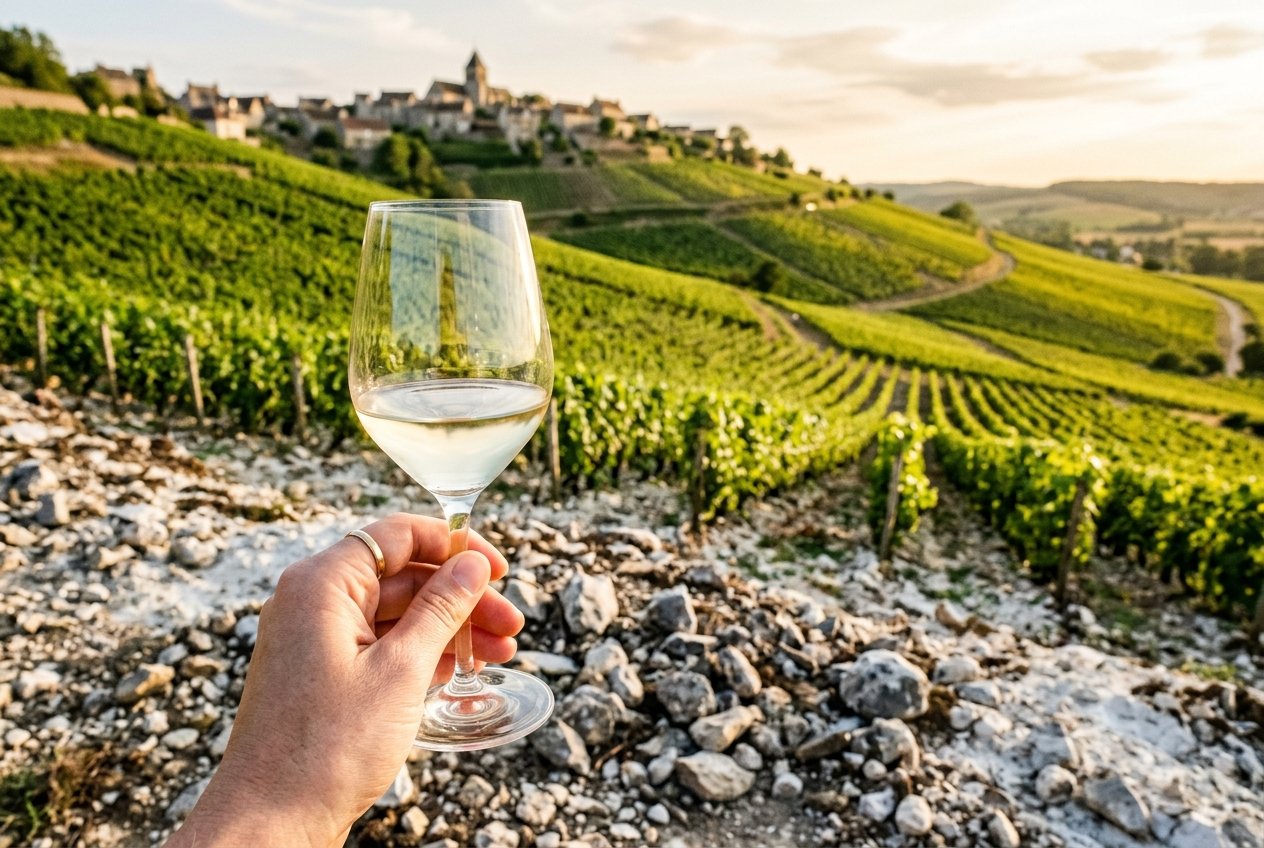
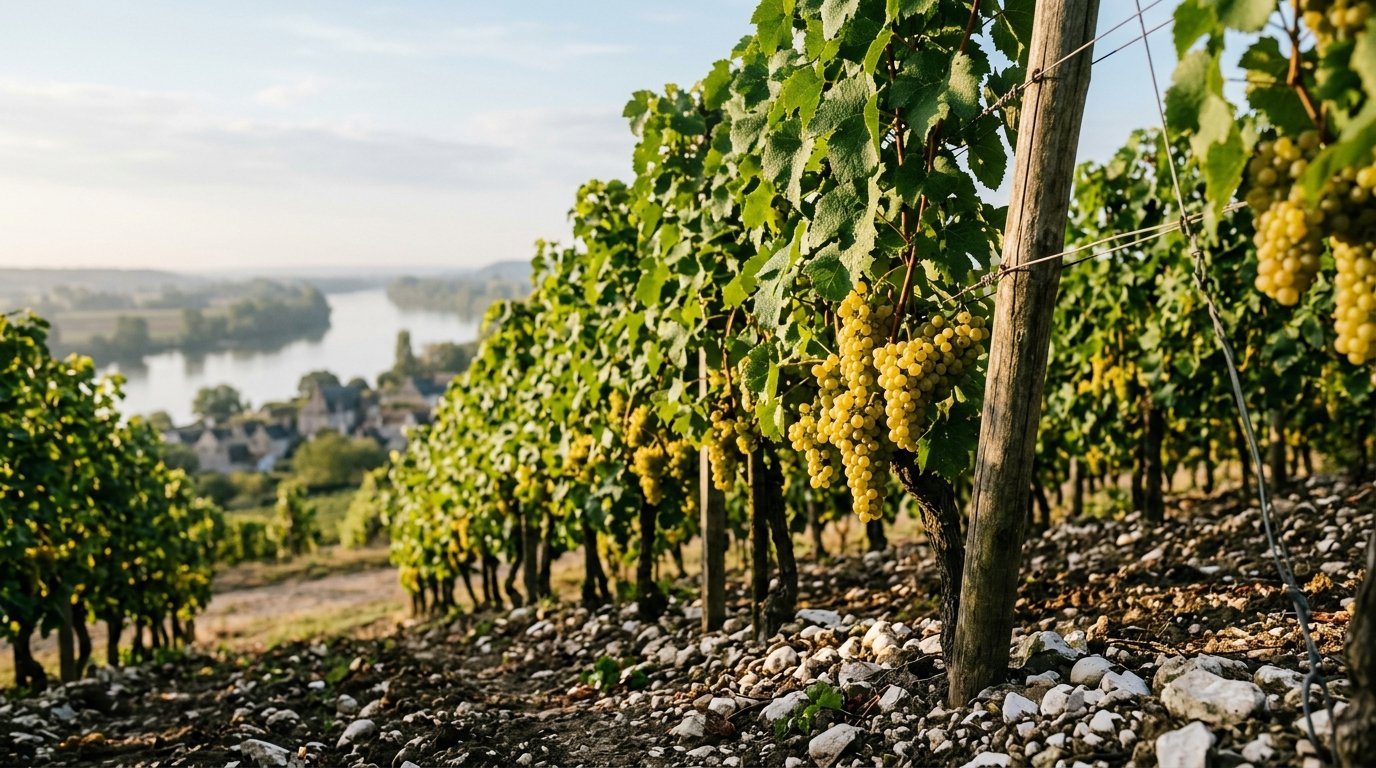
The soils of the region come from the Armorican Massif, a very old mountain range now eroded. You find granite, gneiss, schist and, in places, gabbro, a dark and hard volcanic rock. These poor soils force the vine to reach deep for water, and they give tauter, sometimes saline wines. To place Muscadet among the other vineyards of the valley, our Loire Valley wine map guide is a good starting point.
What does « sur lie » mean on a Muscadet label?
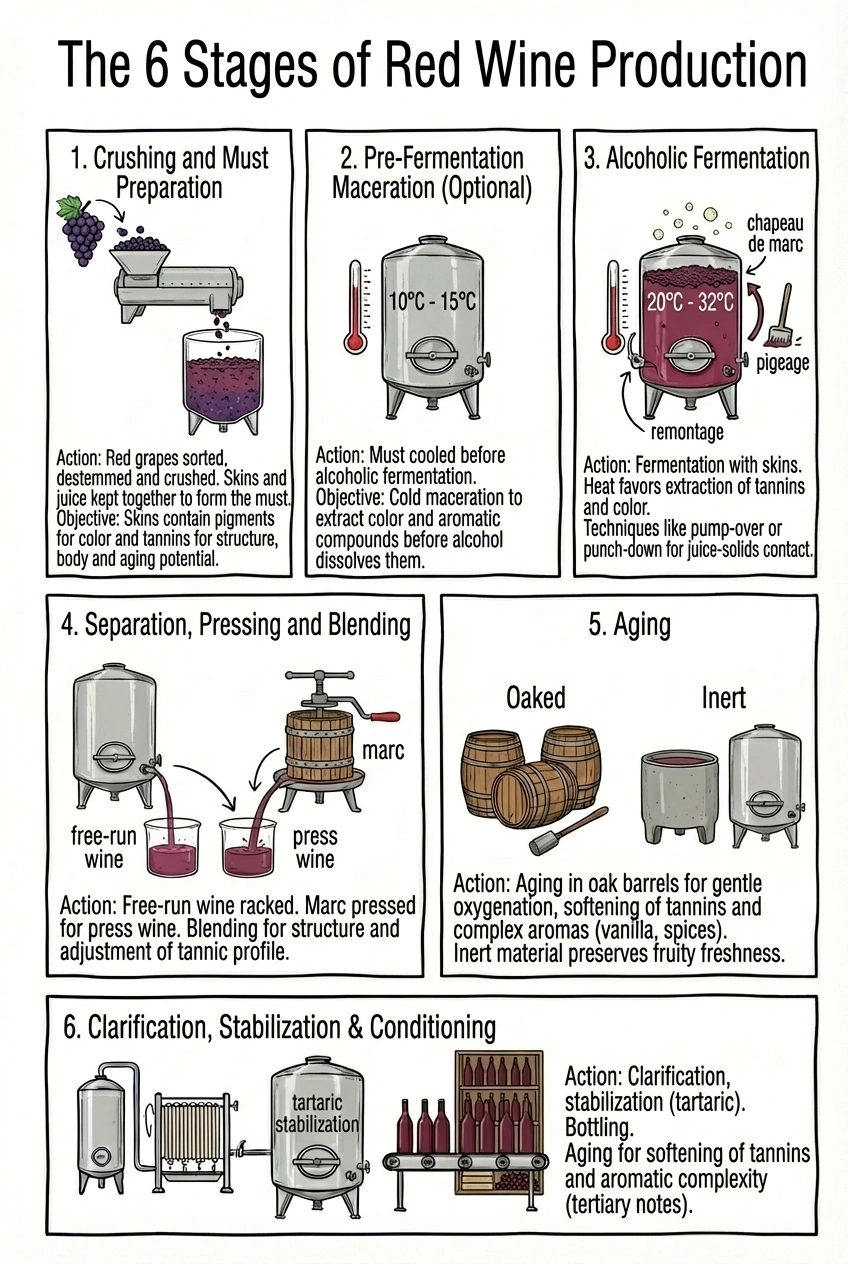
After alcoholic fermentation, the yeast cells die and form a deposit at the bottom of the tank: these are the lees. In a wine « sur lie », the winemaker leaves the wine in contact with this deposit throughout the winter instead of racking it off quickly. To carry the mention, the wine must be bottled between 1 March and 30 November of the year following the harvest, directly from the tank in which it aged. This slowly prolonged contact gives more roundness and volume, with notes of bread and biscuit.
Oenology explains this mechanism clearly: by stirring the lees during ageing, the well-known bâtonnage, you give the wine more body and extra flavours such as biscuit and bread. Winemakers generally avoid this technique for aromatic grape varieties. Melon de Bourgogne is neutral, and that is why it suits this kind of ageing so well: it has room to take on this texture without losing its identity. Muscadet sur lie has become one of the clearest examples of what lees bring to a white wine.
One important nuance remains: « sur lie » is not a guarantee of quality in itself. It is an ageing method, and it works best when the grapes were already good. A wine that is too young or poorly balanced will gain nothing from sitting on its lees. The mention tells you about the style of the bottle, rounder and more textured, but not about the rigour of the grower. To understand how a white wine is made from harvest to bottling, our guide to white wine production explains the steps.

Partner offer

Sip the Loire’s Finest.
🇺🇸 USA shipping only
The crus communaux of Muscadet: the true summit of the appellation?
For a long time, Muscadet lacked a clear hierarchy. Since 2011 the crus communaux have offered one: ten precise geographic denominations, each tied to a terroir, recognised within the Muscadet Sèvre-et-Maine appellation. The first three to be recognised, in 2011, were Clisson, Gorges and Le Pallet. Others joined later, including Château-Thébaud, Goulaine, Monnières-Saint-Fiacre and Mouzillon-Tillières. Together they cover only a few hundred hectares, a very small part of the vineyard.
The rules are demanding: the wines must age at least 24 months on their lees before being released. That is much longer than a classic Muscadet sur lie, which can leave the cellar as early as the spring after the harvest. This patience gives the wines time to gain depth, complexity and length. Yields are also lower, and the vines are often old and carefully tended.
Each cru expresses its rock. In Clisson, granite gives powerful, mineral wines with a dense core. In Gorges and Le Pallet, the darker gabbro brings marked tension and salinity, with a finish that recalls wet stone. These differences are easier to feel by tasting two crus one after the other, from the same vintage. These wines age well, for anyone who wants to leave the cliché of the wine of the year behind.
At what temperature and in which glass should you serve Muscadet?
Standard sommelier service guidelines recommend serving light or medium-bodied white wines between 7 and 10 °C, and fuller whites between 10 and 13 °C. This applies well to Muscadet: a young, lively wine is drunk around 7 to 9 °C, a sur lie a little less cold, and a cru communal benefits from being served at about 10 to 12 °C. Too cold, and the wine loses its aromas and nuances, and the texture from the lees disappears. A bucket filled with water and ice chills faster and more evenly than a bucket of ice alone.
| Muscadet style | Serving | Typical pairing |
|---|---|---|
| Young Muscadet AOC | 7 to 9 °C | Oysters, prawns, crab |
| Sèvre-et-Maine sur lie | 8 to 10 °C | Seafood platter, grilled fish |
| Cru communal (Clisson, Gorges, Le Pallet) | 10 to 12 °C | Fish in beurre blanc, creamy poultry |
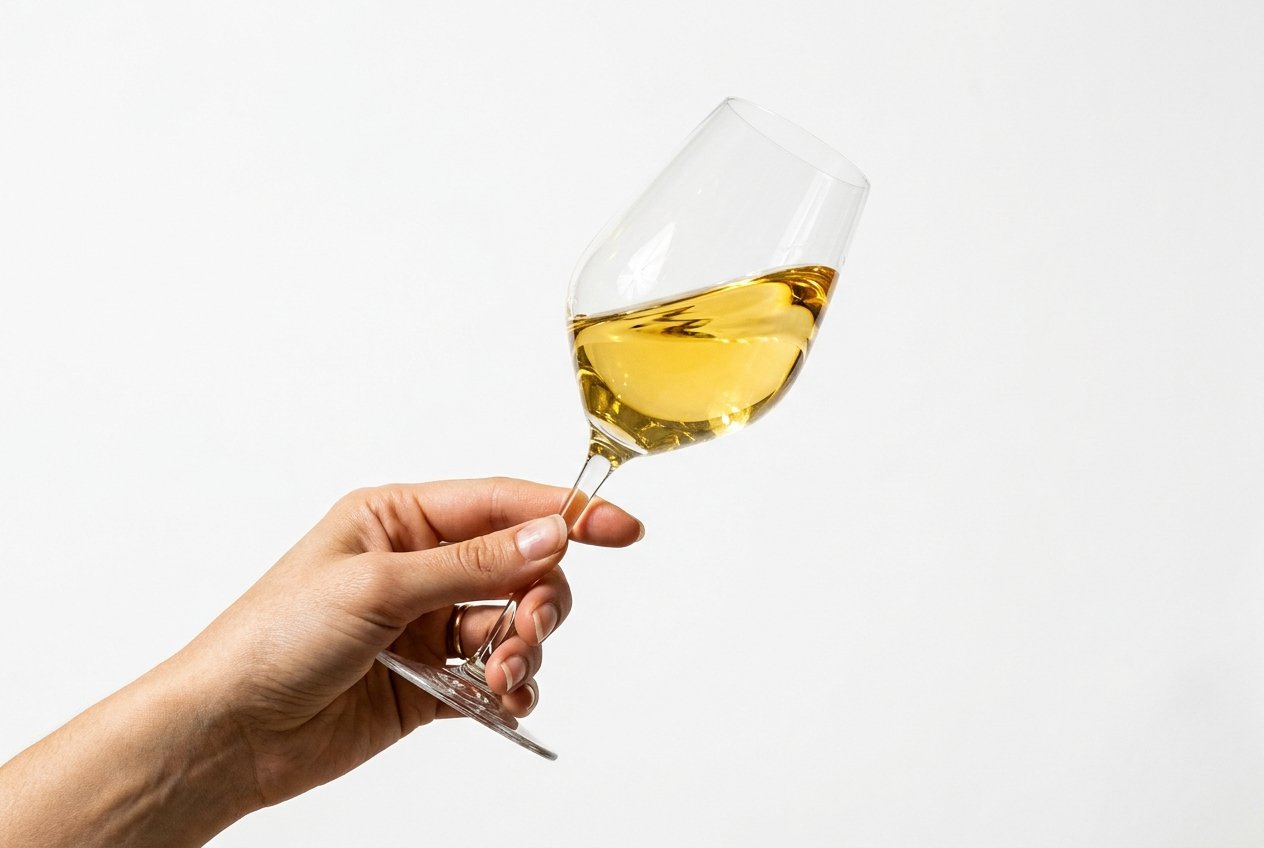
For the glass, choose a shape whose rim narrows slightly, to concentrate the aromas. Glasses must be perfectly clean, as detergent residue or a fingerprint alters the perception of the wine. Pour white wine no higher than halfway, to leave room for the nose. To learn how to spot aromas and texture, our guide to the steps of wine tasting walks you through it.
Which pairings work with Muscadet, beyond oysters?
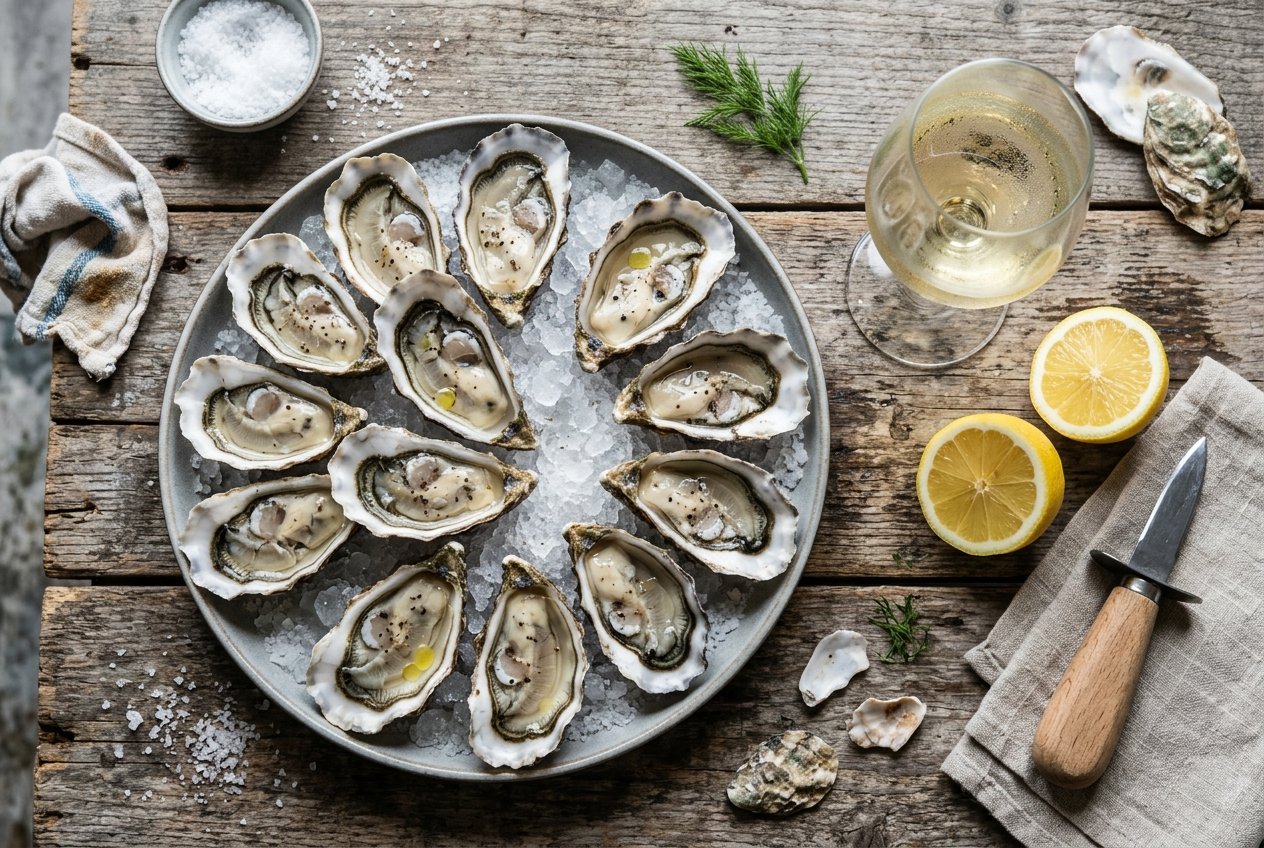
Oysters remain the classic, and they deserve it: the acidity of Muscadet, its saline touch and its freshness answer the iodine and creamy flesh of the shellfish. The range of seafood widens effortlessly, from prawns to crab, from cockles to whelks. Muscadet is a seaside wine, born a few dozen kilometres from the Atlantic, and its match with the sea is almost obvious. What is less obvious is that it also goes with other dishes people do not imagine.
A Muscadet sur lie, with its slightly buttery roundness, pairs very well with grilled fish, a sole meunière or fish rillettes. A cru communal has the structure to stand up to pike or pike-perch in beurre blanc, the emblematic sauce of the region. A fresh goat cheese works too, and our article on wine pairing with goat cheese gives more examples. For a wider idea of what the white wines of the valley bring to an aperitif, our guide to Loire Valley aperitif wines extends the picture.
To go further, nothing beats a visit on site: the Muscadet wine road is easy to drive from Nantes, and many cellars offer tastings. The Divine Loire app helps you spot estates to visit and plan your stops.
|