If there is one noble white grape variety capable of enthralling both the curious novice and the seasoned sommelier, it is undoubtedly Chenin Blanc from the Loire Valley. No other white grape in the world possesses such a chameleon-like ability to mirror the exact matrix of its soil while traversing decades in the cellar with vibrant freshness.
As one travels along the hillsides of the Loire river, from Anjou through to Touraine, Chenin does not merely offer a wine tasting : it presents a geological and poetic journey. From the dark schists of Anjou Noir to the white tuffeau limestone of Vouvray and Saumur, every glass tells the story of a perfect harmony between the mild Loire climate and the vigneron’s craft.
What is the fascinating history of Chenin Blanc in the Loire Valley?
The history of Chenin Blanc is deeply rooted in the memory of the Loire region. Ancient records from the Saint-Glodez Abbey in Angers mention its cultivation as early as 845 AD under the name Plant d’Anjou. However, it was during the 16th century that François Rabelais [the 16th-century French Renaissance writer and humanist] immortalized the grape in his famous masterpiece Gargantua, praising its comforting qualities during the harvest.
Its definitive name likely derives from Mont Chenin, located near the Cormery Abbey in Touraine, where monks carefully selected the finest vines. Modern DNA analysis has confirmed that Chenin Blanc is a direct descendant of Savagnin and a close relative of Sauvignon Blanc, which explains its razor-sharp acidity and structural elegance.
Why is Chenin Blanc the most versatile grape variety in the world?
While Chardonnay and Sauvignon Blanc dominate global vineyard acreage, neither can match Chenin in stylistic breadth. Across more than 10,000 hectares in the Loire Valley, it expresses itself through four major wine styles, all united by a distinctive mineral core.
In its dry (sec) style, it delivers crisp, incisive wines brimming with green apple, fresh lemon, and crushed flint notes. As a demi-sec (off-dry) wine, it balances subtle honeyed sweetness with a vibrant spine of acidity. In warm, sunny vintages, botrytis (noble rot) allows for the harvest of concentrated grapes that yield legendary moelleux and liquoreux (sweet) wines scented with wildflower honey, beeswax, and candied orange peel.
Finally, Chenin Blanc forms the backbone of the region’s finest sparkling wines, imparting its freshness and fine bubbles to Crémant de Loire as well as sparkling Saumur and Vouvray.
What are the main terroirs of Chenin between Anjou and Touraine?
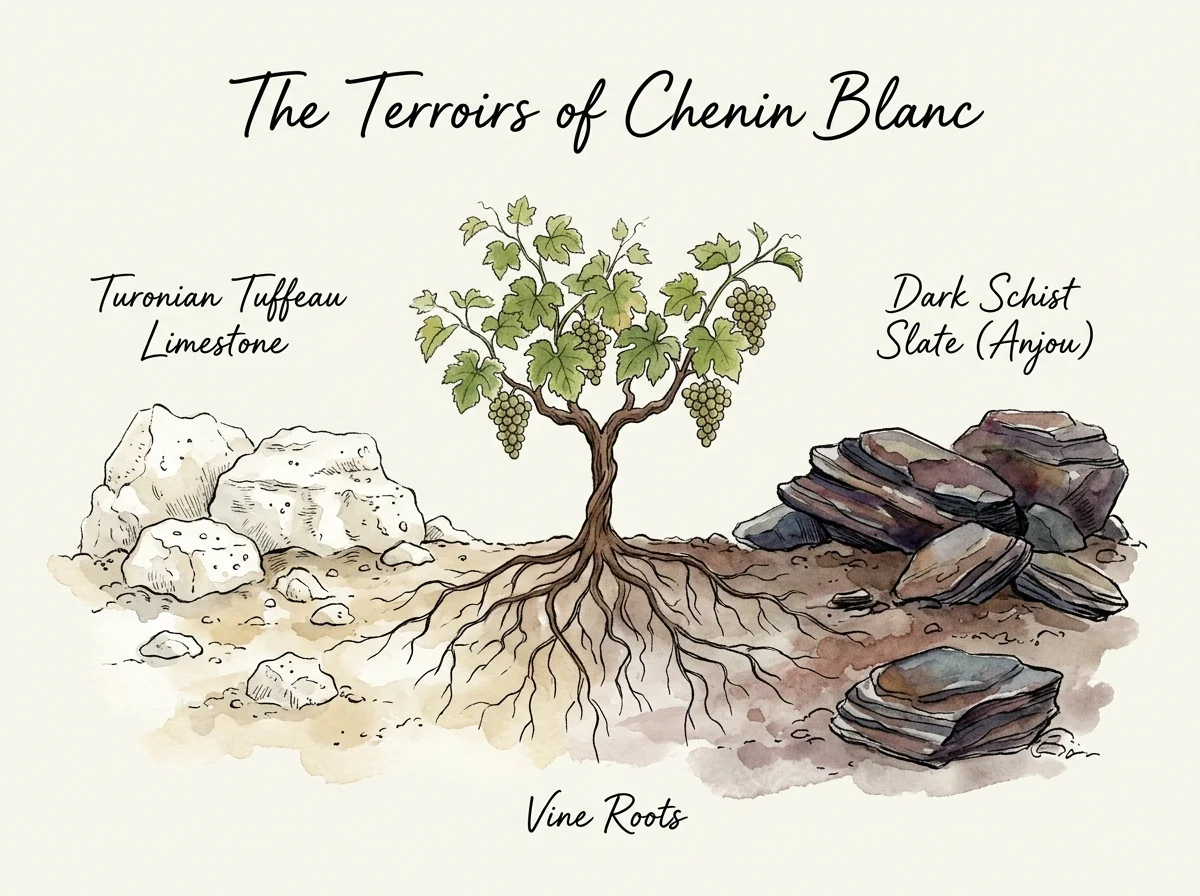
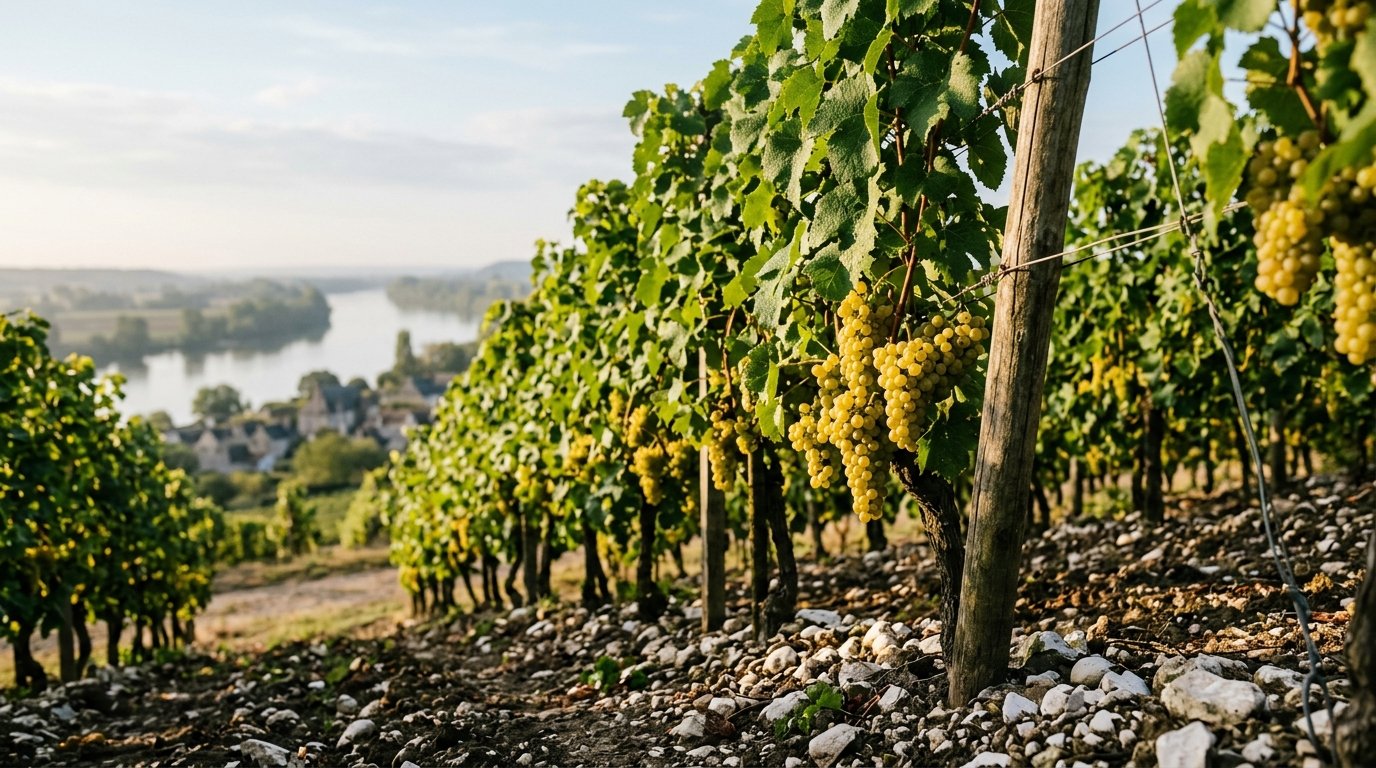
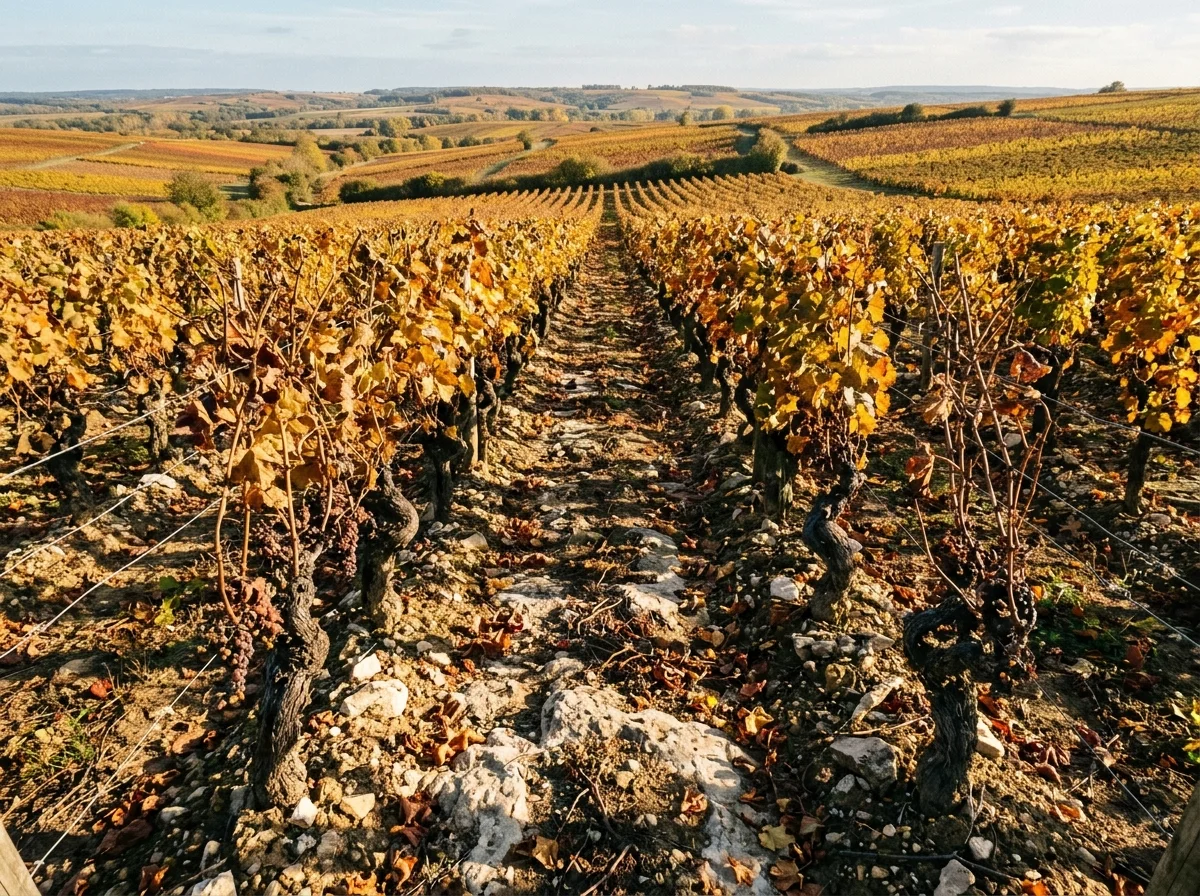
The secret of Chenin Blanc lies in the geological duality between Anjou Noir and Anjou Blanc. To the west, on the ancient bedrock of the Armorican Massif, dark schists and slate soils lend the wine a taut, chiseled minerality, vividly expressed in the vineyards of Savennières and Coteaux du Layon.
Heading east toward Touraine, the Paris Basin unveils its chalky tuffeau limestone, a porous white stone of the Turonian era. In Vouvray, Montlouis-sur-Loire, and Saumur, Chenin gains plush texture, poached pear aromatics, and refined floral elegance.
How do the aromas and cellar aging potential of Chenin Blanc evolve?

The aging capacity of great Loire Chenin Blanc defies time. Thanks to its naturally high tartaric acidity, a bottle of fine Vouvray or Savennières can cellar gracefully for over half a century in cool troglodyte caves.
In its youth (1 to 5 years), Chenin charms with bright notes of green apple, citrus zest, chamomilla, and white flowers. After 10 to 20 years in bottle, its evolution is breathtaking : the bouquet deepens into rich notes of acacia honey, toasted hazelnuts, white truffle, and delicate saffron, while retaining a lithe, mineral finish.
What are the best food pairings for Loire Valley Chenin Blanc?

The natural acidity of Chenin Blanc makes it a stellar companion at the dining table. For a dry, mineral-driven Chenin Blanc, pair with freshwater fish in beurre blanc sauce, pan-seared scallops, or aged goat cheese such as Sainte-Maure de Touraine.
For an off-dry or sweet Chenin, consider pairing with seared foie gras, mildly spiced Asian cuisine, or classic fruit tarts. The wine’s structural acidity cleanly cuts through rich dishes with remarkable precision.
Ready to discover the hidden gems of our vineyard?
Your journey into the world of Loire Chenin Blanc has only just begun. Whether you seek a cellar-worthy vintage or a refreshing white for a sunny lunch, the Loire Valley always has a memorable bottle to share.
To explore more wine guides and producer features, browse our latest stories in The Magazine and follow our upcoming coverage of Touraine and Anjou appellations!