They say Cheverny whites are as tidy as a panel from a Hergé comic: clean lines, clear colours, a touch too well-behaved. Cyrille Sevin’s “Une Lente Mélopée” never read the comic, which is a good thing. It arrives slightly cloudy, quiet, and reveals itself only at its own pace.
A melopoeia is a slow, even chant, something close to a litany, from the Greek melopoiia. It is a fitting name for a wine that refuses to hurry. Opened at a family dinner, it gave me very little at first: a reserved, almost shy nose, without the aromatic swagger Sauvignon Blanc is often credited with. It needed ten or fifteen minutes of air in the glass before the white flowers began to speak. I had no reason to complain.
How this Cheverny white ended up on our table
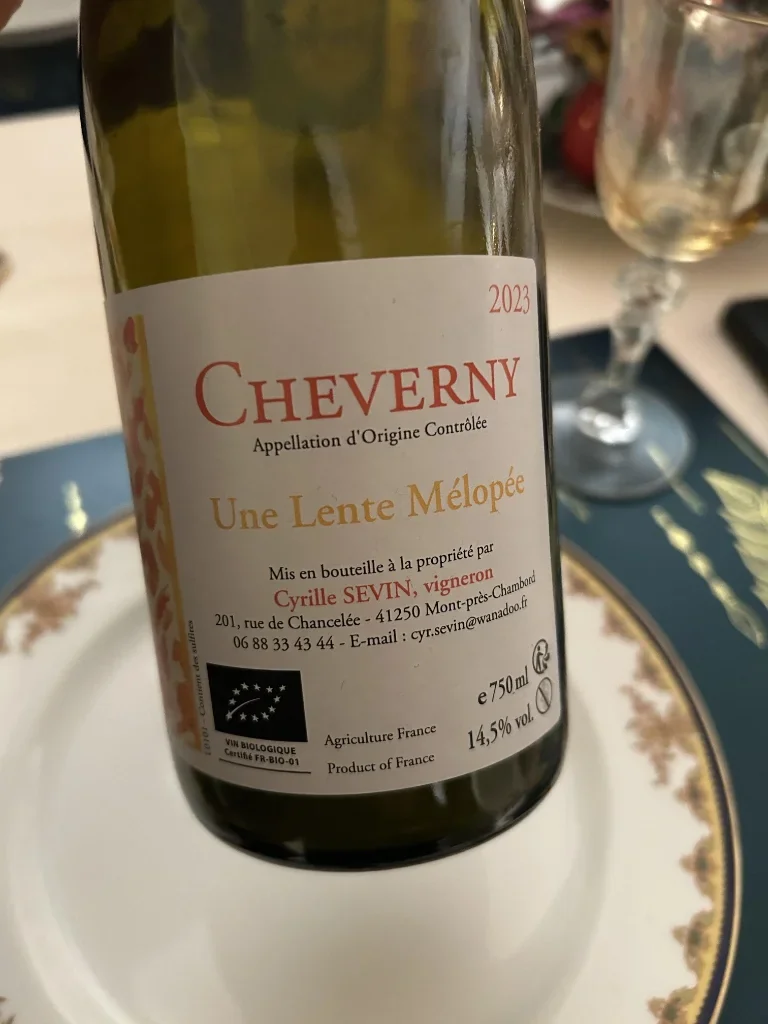
The story starts at the Halle de la Morandière in Fondettes, near Tours, at Vinaviva, “Les vins d’ici”, an event that gathers winemakers from the region. My brother-in-law tasted the wine there, bought a bottle and brought it back for a family meal about ten days later. That is how many good winemaker discoveries happen: a stand, a glass, a bottle that leaves under your arm. The bottle in front of me is a 2023, 14.5% ABV, certified organic (FR-BIO-01), and labelled “contains sulphites”.
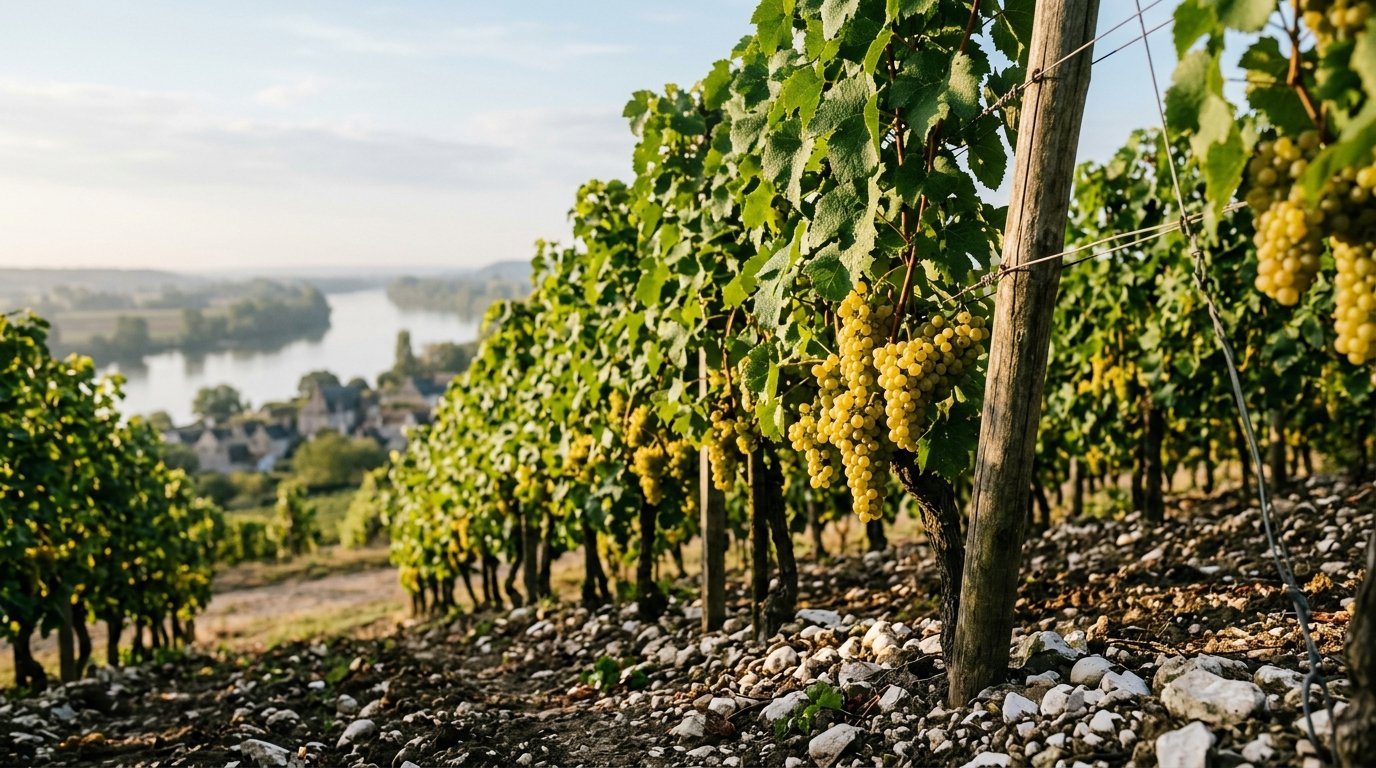
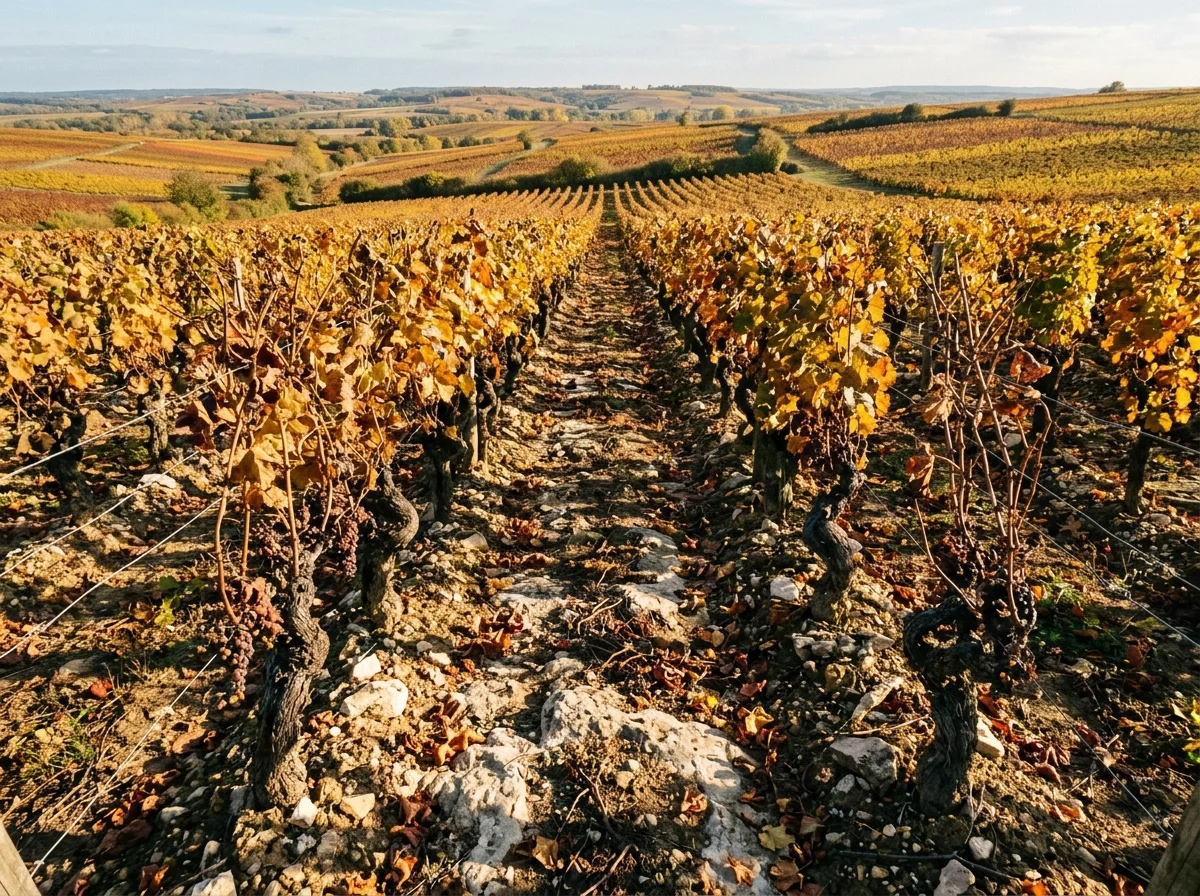
The label says the wine was bottled at the estate by Cyrille Sevin, winemaker in Mont-près-Chambord, in the Loir-et-Cher department. We are a few kilometres from the Château de Chambord, begun by Francis I in 1519, and from the Château de Cheverny, often cited as the inspiration for Tintin’s Marlinspike Hall. The scene is set: a quiet vineyard wedged between Sologne and the Loire Valley, far from the noise of the great appellations. Cheverny itself has held AOC status since 1993.
For this wine I also cross-checked the notes other tasters have published online, so as not to rely on my single bottle. They converge on the essentials: an organic, author-driven white, fuller than the appellation average. I quote their observations with caution, and I separate what I tasted from what I read.
Cheverny white wine: Sauvignon, Chardonnay and a little patience
Cheverny blanc is often summed up as Sauvignon, which is both accurate and reductive. The classic blend of the appellation gives pride of place to Sauvignon Blanc, completed by Chardonnay and sometimes a touch of Menu Pineau (also known as Orbois). Sauvignon brings tension and citrus, Chardonnay brings roundness and body. Menu Pineau, when present, adds a more fruity and more acidic note. Each winemaker doses these three voices in their own way.
The reviews I read describe oak fermentation and careful ageing on lees for this cuvée, which explains why the wine goes beyond simple varietal character. Ageing on lees means letting the wine rest on its dead yeast cells, which adds texture and length. The same reviews mention light vanilla, caramel and sandalwood, along with limestone minerality. When I opened it, these oaky touches were almost invisible, which is a good sign: oak should support, not sign its name.
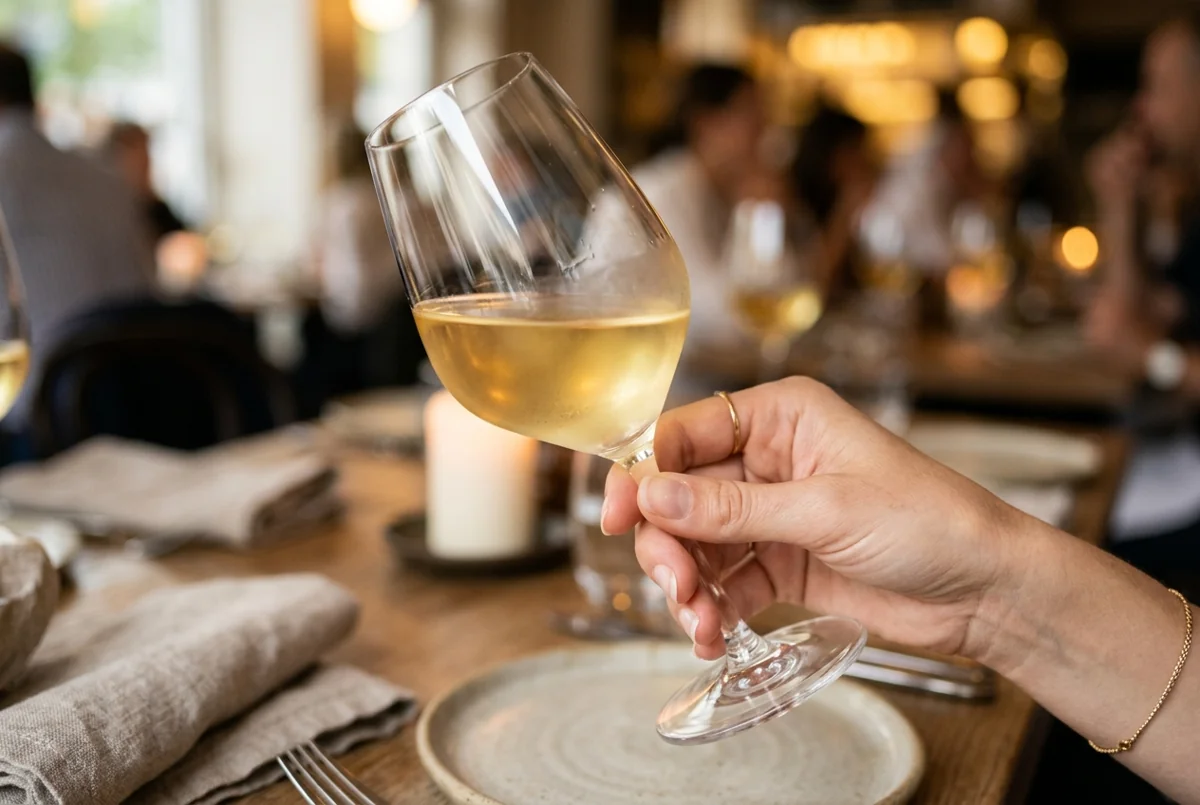
The slightly cloudy colour suggests the wine was not filtered, although I could not confirm this with the estate. This light haze is not a flaw: it is often the mark of a low-intervention approach. In the glass it gives a slightly milky look that I found rather appealing. Served too cold, the wine would lose expression, so take it out of the fridge about fifteen minutes before pouring.

Partner offer

Sip the Loire’s Finest.
🇺🇸 USA shipping only
Tasting notes: white flowers, texture and mouth-watering acidity
On the nose, after aeration, white flowers lead the way: a fine production of floral aromas, clean and delicate. Online tasters also mention citrus (lemon, green apple), white fruits such as pear and peach, and exotic touches of pineapple. I did not pick up all these fruits myself, since my tasting centred on the floral side, and I would rather not invent what I did not smell. What matters here is finesse: nothing shouts, everything holds together.
On the palate, reviews describe a white far from lean, with body, amplitude and roundness, while keeping a vibrant, mouth-watering acidity. That contrast between substance and freshness is what makes the cuvée interesting. My own verdict fits in a few words: a very well-made, harmonious wine that pleases seasoned drinkers as much as those less familiar with wine. The 14.5% alcohol does not show, a sign of good balance.
| Key Point | Reference | Detail & Observation |
|---|---|---|
| Appellation | Cheverny AOC | Quiet vineyard in Loir-et-Cher, between Sologne and the Loire Valley |
| Cuvée & Estate | Une Lente Mélopée | Cyrille Sevin, independent winemaker in Mont-près-Chambord |
| Vintage & Alcohol | 2023 • 14.5% ABV | Harmonious balance of texture preserving freshness and drinkability |
| Farming method | Certified organic | FR-BIO-01 certified, dedicated soil work and low-intervention approach |
| Serving advice | 10 to 12 °C | Chilled, not icy; 10 to 15 minutes of air in the glass is essential |
| Cellaring potential | 3 to 5 years | Good substance and vibrant acidity promise graceful ageing |
On ageing, I stay deliberately cautious: I have no verified information from the estate about this vintage’s potential. The acidity and texture suggest it can hold for a few years in the cellar, but that is an impression, not a promise. If you own a bottle, tasting one now and another in two years is the best way to decide.
At the table: fish, asparagus and spiced dishes
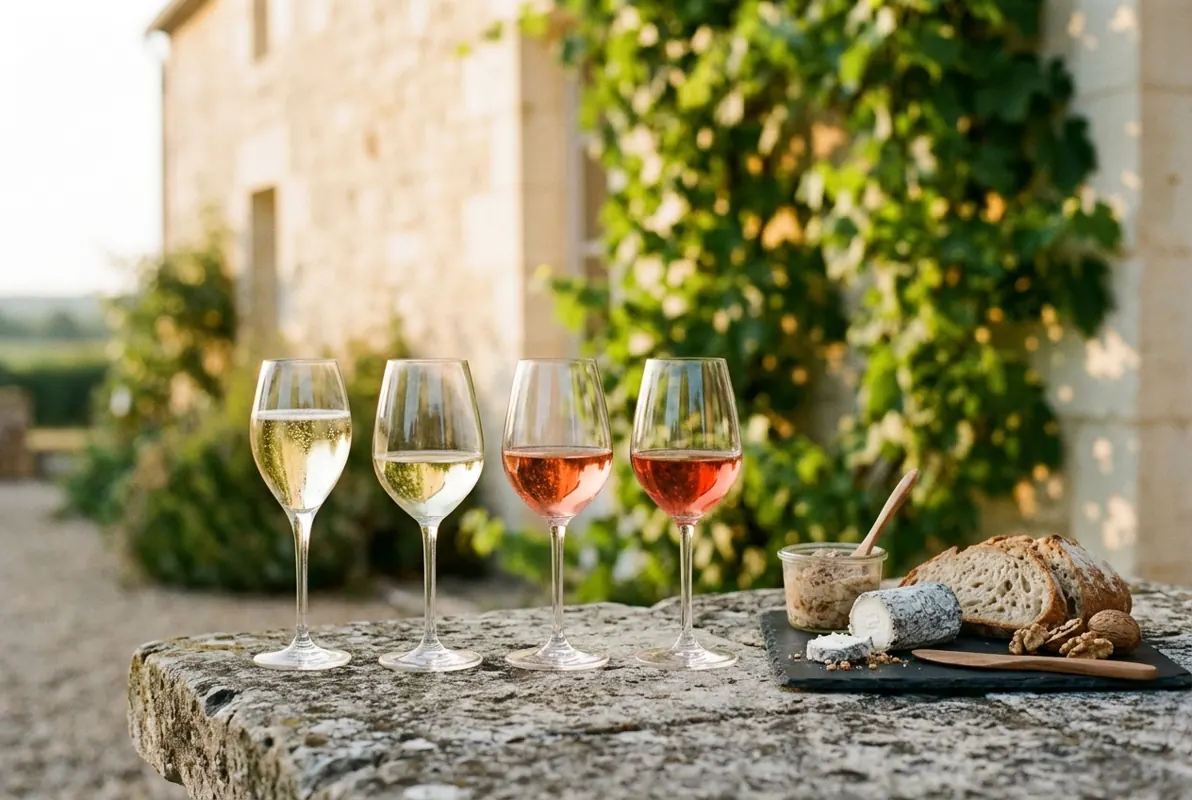
The pairings suggested by tasters fit this profile. The wine’s texture and freshness suit cooked fish such as pike-perch in beurre blanc, spring asparagus, whose bitterness needs supple acidity, and regional goat cheeses. A Crottin de Chavignol or a Selles-sur-Cher would not scare this wine. It is also happy as an aperitif, simply with bread and fish rillettes.
More surprising, some reviews mention spicy Asian cooking, such as Thai prawns. The idea holds: the roundness tempers the chilli, and the acidity refreshes the palate between bites. I have not tested this pairing, but the logic is the same as for a dry Chenin or a Riesling. With a creamy poultry dish or oven-baked fish at a family table, the bottle found its place without effort.
What to take away from this cuvée
“Une Lente Mélopée” is a Cheverny white with character, stepping away from the simple, zesty Loire white to offer something riper and more patient. Its maker, Cyrille Sevin, farms organically in an appellation many visitors only drive through on their way to the châteaux. This cuvée alone is a reason to stop. Finding it takes some curiosity, which is no bad thing: you come across it at winemaker fairs like Vinaviva, or by contacting the estate directly.
In the end, this wine convinced me without much noise, which is probably the best definition of a melopoeia. If you pass through Cheverny or Chambord, push open the door of a local cellar and ask what they have that is both organic and patient. And to keep track of your own tastings, the Divine Loire app is there for that.
|