The Six-Step Symphony of Winemaking
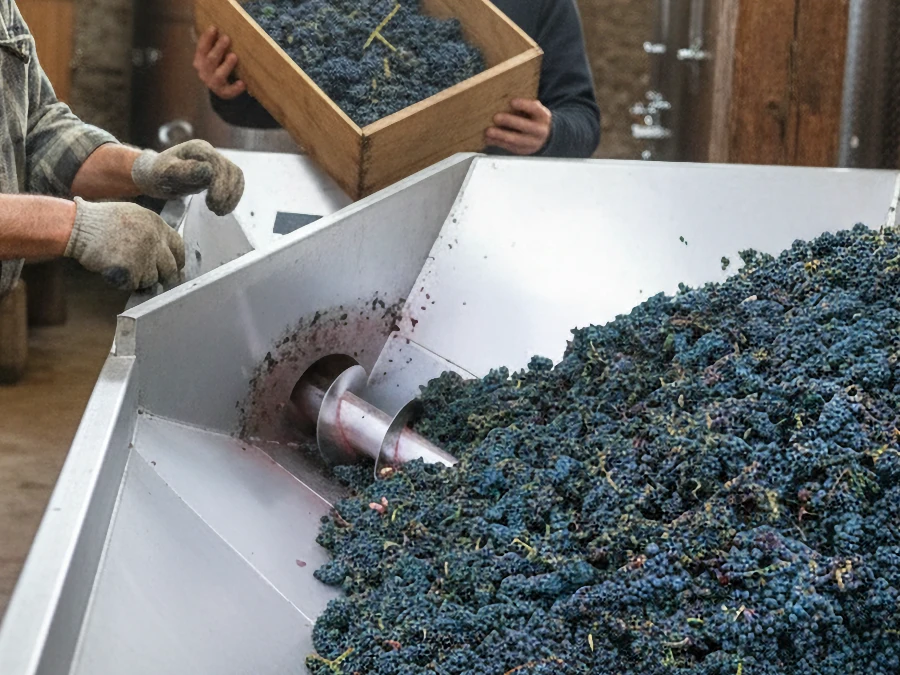
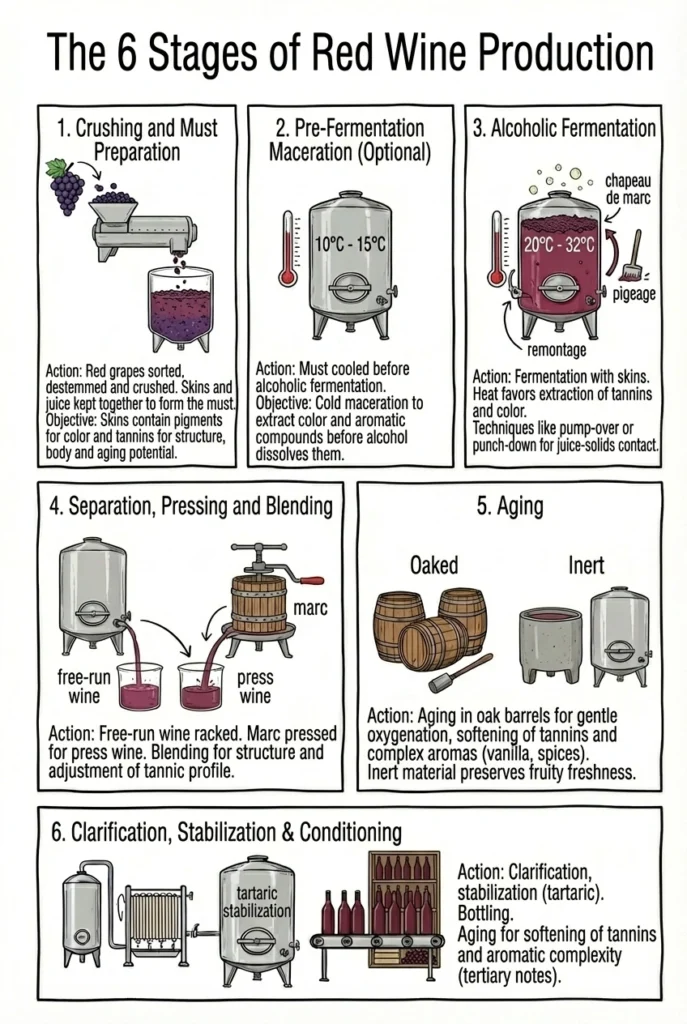
Before diving into vats and tannins, let’s open with structure. The making of red wine unfolds in six distinct yet interconnected movements: crushing with skins intact, fermenting at high temperatures with macération, meticulous separation of wine and solids (two kinds: de goutte and de presse), a nearly universal malolactic fermentation, delicate élevage (aging), and finally, clarification and bottling. It reads like an orchestral score—and the first crescendo is surprisingly tactile.
1. Crushing with the Skins
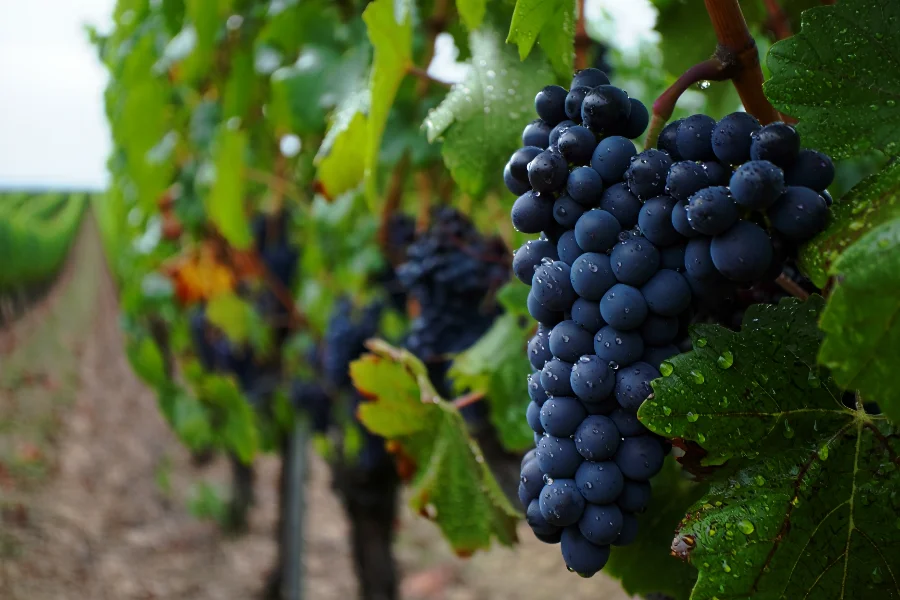
The grape, as a fruit, is modest. But its skin is where the alchemy begins. That dark robe, rich in tannins and anthocyanins, is the true architect of red wines’ depth and hue. Unlike white wine production where juice is swiftly separated, here, the pulp and skins engage in close, prolonged contact.
This contact is elemental, and it’s not just for color. The skins diffuse aromatic precursors and structural components, giving birth to those famous lingering finishes sommeliers wax poetic about.
Curiously, the medieval Cistercians of Burgundy were among the first to grasp the nuance of skin contact. Their 12th-century cellars, still functional today, were designed to gently manage grape must without bruising its noble potential.
2. Fermentation & Maceration: The Heartbeat
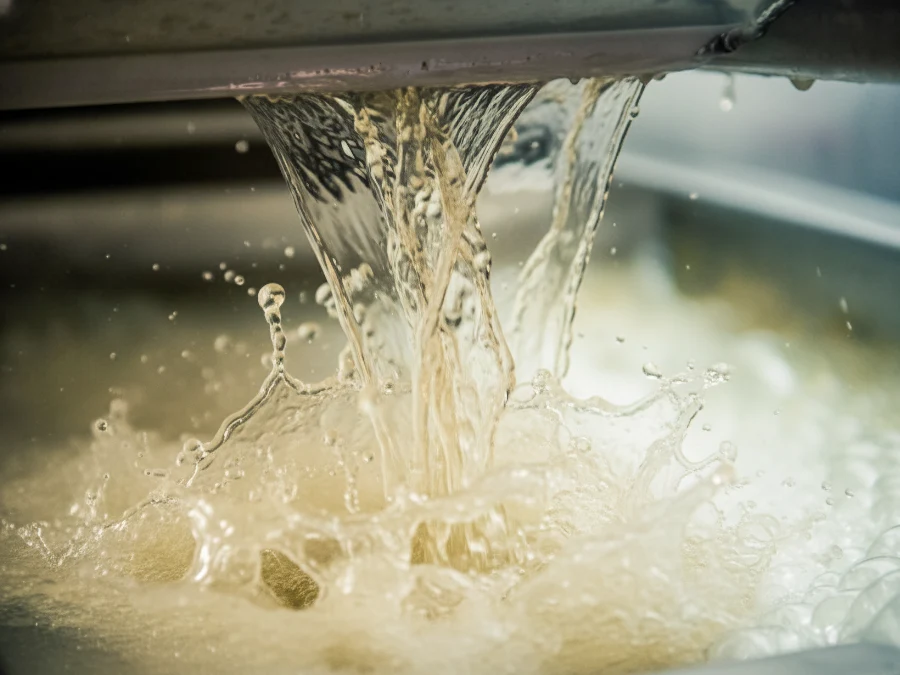
Fermentation in red wines dances to a warmer rhythm than its white counterpart—typically between 20°C and 32°C. This isn’t happenstance.
The heat accelerates extraction, coaxing tannins into the forefront and deepening the wine’s vein of color. But the real artistry lies above the liquid: the chapeau de marc, or cap of skins and solids floating on the surface.
To counteract this natural segregation, winemakers employ two gentle yet effective traditions. Remontage—the elegant pumping of juice over the cap—and pigeage, manually or mechanically nudging the cap downward, ensuring optimal transmission of flavors.
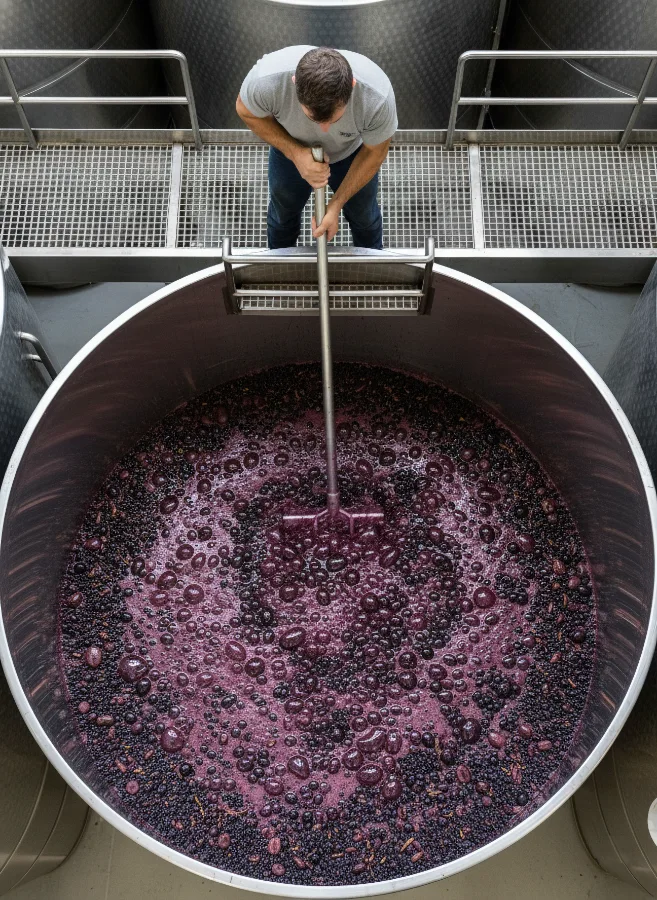
There’s a fine line between rusticity and finesse. In 1945, the legendary vintage of Château Mouton Rothschild was fermented in oak vats that demanded such careful pigeage, it was reportedly assigned to just two trusted cellar hands—an early sign that precision would shape modern oenology.
3. The Great Divide: Wine of Free Run and Press
As fermentation concludes, so does the communal bond between skins and juice. What follows is a quiet but profound separation.
Vin de goutte—the wine that escapes naturally under the weight of its own desire—is typically vibrant and refined. In contrast, vin de presse, born through mechanical compression, is more robust, infused with tannic backbone.
Most winemakers treat these two entities with individual respect before deciding on final blends. As they say in Saumur: “Better a wise blend than a bold barrel.”
4. Going Softly: The Malolactic Whisper
What happens next would make a chemist’s heart flutter: malic acid, sharp and green as a Granny Smith apple, gently morphs into lactic acid—creamy, smooth and supple. This transformation is known as malolactic fermentation, a near-standard in red wine vinification.
Few realize how seismic this step is. By reducing acidity and adding complexity, FML turns a wine from brash adolescence into graceful maturity. Absent this stage, many reds would retain a jarring edge, more suited to salad dressings than candlelit dinners.

Partner offer

Become a winemaker for a day with Wecandoo!
Great wine workshops in 🇫🇷
5. Aging & Elevation: Of Barrels, Tanks, and Time
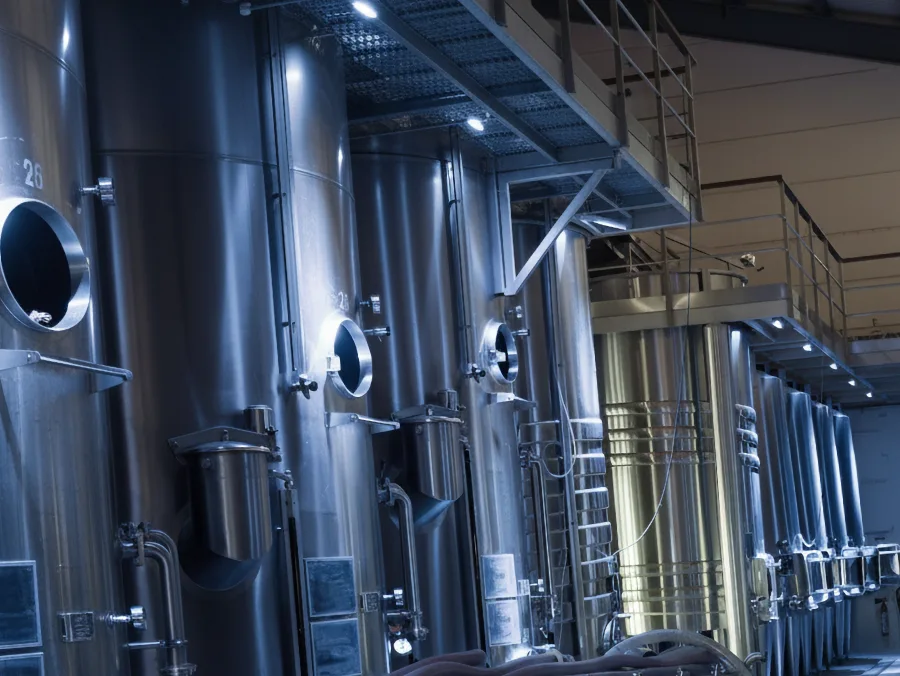
As the young wine rests, the vigneron chooses its cradle—be it a centuries-old oak barrel or pristine stainless steel tank. Barrel aging is both an art and a philosophy. The subtle ingress of oxygen through wood pores helps tame aggressive tannins, while also adding vanillin, clove, and smoky undertones.
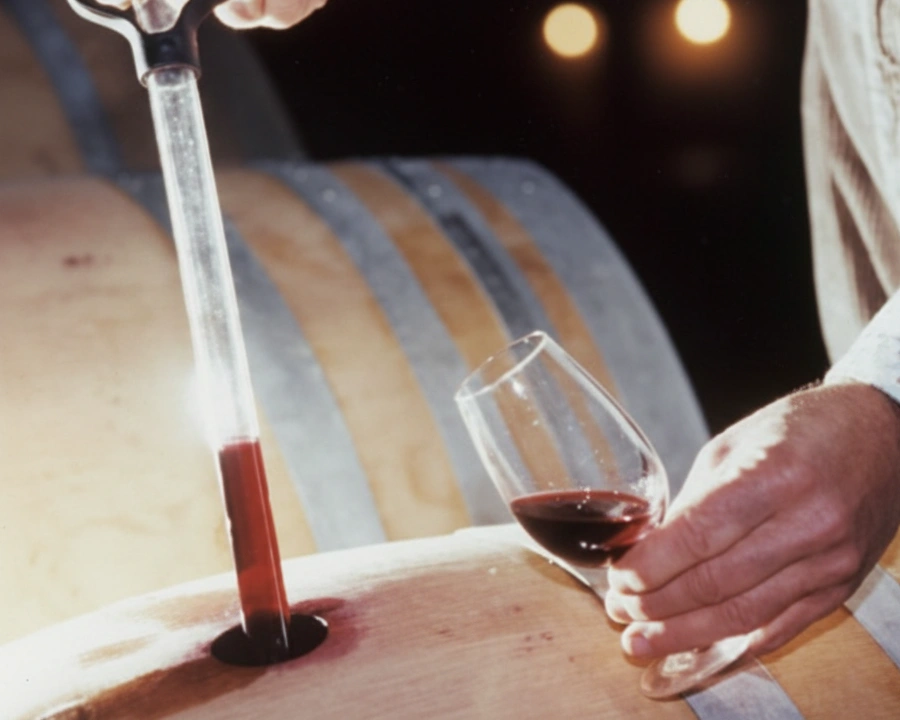
Yet all barrels are not created equal. A new oak fût will bestow assertive character; older barrels whisper, instead of declare. Then there are the rebels—those who choose concrete eggs or amphorae, prioritizing texture over timber.
In modern Saumur, Domaine Guiberteau ages its expressive reds in large, used barrels to soften tannins while preserving the wine’s limestone tension. It’s a reminder: aging is not about adding, but revealing.
6. Clarity and Commitment: Final Touches
All good things must clarify. As sediment settles and microbial risk is managed through stabilization—be it cold treatment or filtration—the wine is readied for bottling.
This step is not just housekeeping. It’s a declaration that the wine is ready to tell its story—matured, shaped, and coherent. Some red wines, especially those rich in structure, are designed for additional bottle aging. Others are meant to sing early, offering fruit depth with minimal astringency.
A Case in Point: Chinon, Loire Royalty
If one needs a compelling example of this craft, Chinon is a textbook case. Located in the central Loire Valley, its iconic Cabernet Franc wines have been crafted using this six-step approach since at least the 15th century.
François Rabelais, the Renaissance writer born in the region, immortalized the wines of Chinon in his tales—consumed not just as beverage, but as philosophical fuel.
Today, leading producers like Bernard Baudry or Charles Joguet continue the tradition, integrating natural macerations, gentle pigeage by foot, and aging in large foudres to preserve native terroir qualities.
A Final Glass
Understanding the journey from grape to glass enhances not only our appreciation, but our palate’s precision. Whether you’re stirring risotto with a splash of Saumur-Champigny or uncorking a 2015 Bourgueil at sunset, let knowledge deepen your savor.
And if curiosity fermented while reading, consider perusing our cellar archives—or better still, join a Loire winery tour where the barrels do the talking. Santé… in six steps.



![PODCAST [S1E4] – The Well-Kept Secrets of Anjou-Saumur Wines](https://divineloire.fr/en/wp-content/uploads/2025/11/geologie-des-vins-d-anjou-saumur-1.webp)
![PODCAST [S1E3] – Chinon, Vouvray, Bourgueil: The Holy Trinity of Touraine Vineyards](https://divineloire.fr/en/wp-content/uploads/2025/11/vignobles-touraine-chinon-vouvray-bourgueil-1-1.webp)